
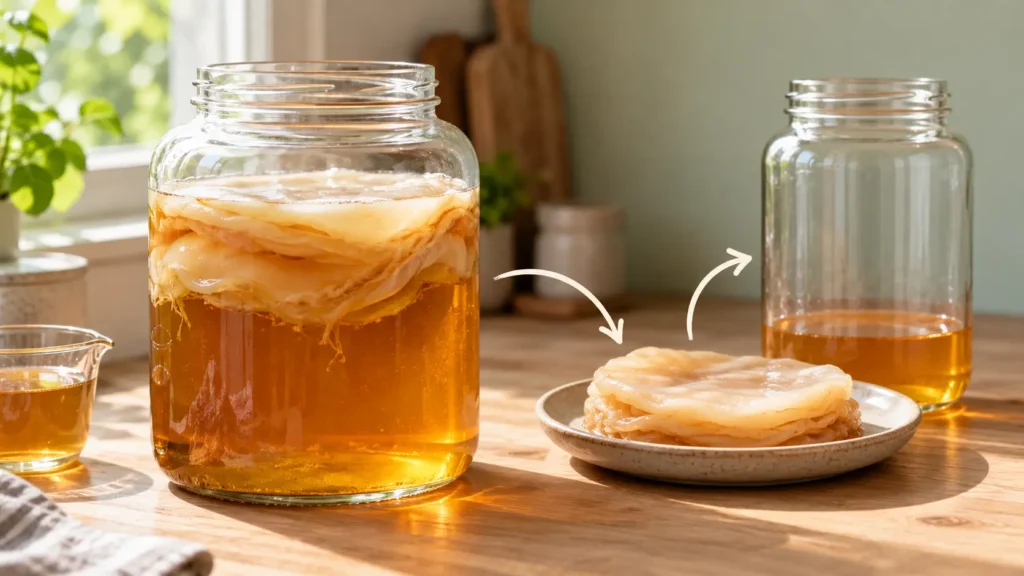
The short answer is that a healthy SCOBY has no strict reuse limit. What matters much more is watching for the right signals.
There Is No Hard Batch Limit
Kombucha SCOBYs can be reused for many years. That sounds almost too good, so here is the nuance.
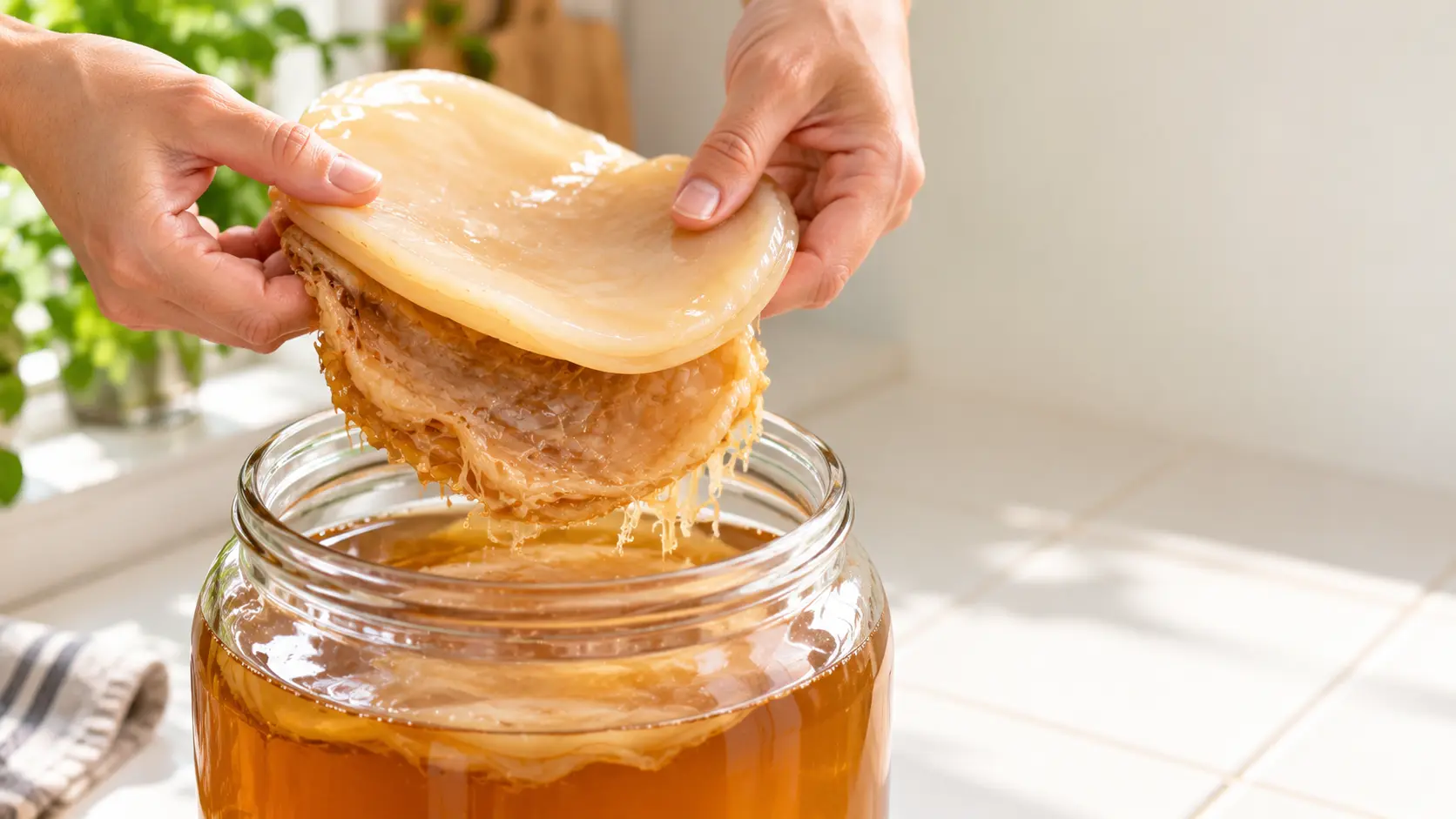
Your SCOBY grows and divides with each batch, so you are constantly producing new layers. Simply remove the older base layers and transfer the newer top layers to your next batch.
The “how many times” question is really about the individual layer, not the colony as a whole. A SCOBY can be used 6 to 12 times in brewing before it starts to lose effectiveness.
But since a fresh layer forms with every batch, the lineage keeps going.
Why the SCOBY Self-Renews
Inside every batch, a two-step reaction drives the whole process. Yeasts in the SCOBY metabolize sucrose into glucose and fructose, which are then converted into ethanol.
Acetic acid bacteria (AAB) then convert that ethanol into acetic acid. This lowers pH and gives kombucha its characteristic sour taste.
At the same time, the bacteria produce cellulose. This leads to the formation of the SCOBY biofilm, which is the baby layer sitting on top of your brew at the end of each ferment.
So the SCOBY is literally rebuilding itself every cycle. That is why a well-managed culture keeps producing strong batches far beyond what most beginners expect.
For a deeper dive into the full fermentation process, check out our How to Brew Kombucha guide.
Signs Your SCOBY Is Still Good
Rather than counting batches, watch the SCOBY directly. A healthy one tells you everything you need to know.
- Color: A healthy SCOBY should be creamy white or light brown, with a smooth or slightly bumpy texture.
- Smell: A healthy SCOBY should have a clean, slightly vinegary smell with no signs of mold.
- New baby layer: One of the most obvious signs of a healthy kombucha brew is the formation of a new, healthy SCOBY on the surface.
- Taste of the brew: The tart taste of kombucha signals an active and healthy SCOBY. When kombucha lacks tartness, it could indicate a SCOBY losing its fermenting ability.
- pH: Healthy kombucha should maintain a pH between 2.5 and 3.5.

When to Peel Off the Old Layers
Older SCOBY layers can become quite dark and thick. While still functional, they can sometimes make the kombucha taste stronger, almost vinegar-like.
Many brewers prefer to use younger SCOBYs or peel away the older layers from the bottom every so often. I do this every three or four batches.
Compost, cook, give away, or discard the old ones. Keep only the top layer, which is the youngest and contains the most active microorganisms.
Peeling old layers is not the same as discarding the culture. The top layer is always your best brewer.
Clear Signs It Is Time to Retire a SCOBY
You should replace your kombucha SCOBY if you ever find traces of mold on it or if it begins to turn black.
A SCOBY can get too old to work correctly. Watch for these specific warning signs:
- Turned black: If your SCOBY turns black, it has died. Discard it immediately.
- Hard or rubbery texture: A SCOBY that has turned very dark brown or becomes hard or rubbery is showing signs it is too old.
- Fuzzy spots: Mold is characterized by fuzzy spots that might appear in green, black, white, or blue. Unlike normal yeast strands, mold exhibits a powdery texture raised above the SCOBY’s surface. If you spot mold, check our guide on Kombucha Mold vs SCOBY before you toss anything.
- No new layer forming: If your SCOBY seems to stop growing, it could be a sign something is off. Healthy SCOBYs continue to grow until they cover the brewing container.
How to Store Your SCOBY Between Batches
Proper storage between brews is what keeps a SCOBY viable long-term. For short gaps, the answer is simple.
For short-term storage of a few days to a couple of weeks, leave the SCOBY in the fermenter, submerged in enough leftover kombucha to cover it completely.
For longer breaks, set up a SCOBY hotel. A SCOBY hotel is simply a large clean glass jar kept at room temperature, filled with spare SCOBYs submerged in kombucha liquid or sweetened tea.
Refrigeration is not recommended because it slows or stops microbial activity. This can throw off the balance in the culture and lead to viability issues that make it sluggish and less effective in future batches.
What to Do With Extra SCOBYs
If you brew regularly, extras accumulate fast. That is a good problem to have.
My personal favorite use for an extra: a strawberry and basil second ferment one summer that quickly became the bottle everyone asked me for. Starting bold second ferments is exactly where a young, spare SCOBY shines as a backup culture.
Explore ideas in our Kombucha Flavors Guide and our full Kombucha Second Fermentation Guide.
Beyond brewing, reusing a SCOBY saves you money. You won’t need to purchase a new one for each batch, which is especially beneficial for those who brew regularly.
You can also give extras away to new brewers. Each time you brew a batch, your SCOBY produces a new baby SCOBY.
Does a Sunken SCOBY Affect Reusability?
One question I get often: “My SCOBY sank, is it still good?” Yes, almost always. Position in the jar has nothing to do with whether a SCOBY can be reused.
Read more in our piece about what to do when Your SCOBY Sank to the Bottom.
For more home brewing tips across all styles and techniques, browse our full Kommbucha, Home Brewing & Kombucha Guides.
As Cleveland Clinic’s guide to kombucha notes, kombucha is generally considered safe for healthy adults. Keeping your SCOBY culture clean and active is the foundation of a safe, consistent brew.
Quick Recap: SCOBY Reuse at a Glance
- No hard limit: A well-managed colony can go for years.
- Individual layers: Typically good for 6 to 12 batches before the base gets too dark or dense.
- Always use the top (youngest) layer for your next batch.
- Retire any layer that turns black, grows fuzzy mold, or stops producing new growth.
- Store at room temperature, never in the fridge, between batches.
Q: How many times can you reuse a SCOBY?
A: There is no fixed number. A healthy SCOBY colony can be reused indefinitely because each batch grows a new layer. Individual layers are typically retired after 6 to 12 batches when they turn dark or dense, but you always have a fresh younger layer ready to take over.
Q: How do I know when my SCOBY is too old?
A: Look for a SCOBY that has turned very dark brown or black, feels unusually hard, or has stopped producing a new layer after fermentation. A brew that stays sweet after two or more weeks is another reliable sign. If you spot these, peel off the old base layers and work with the newest top layer instead.
Q: Should I keep the mother or the baby SCOBY for my next batch?
A: Use the baby, which is the newest top layer. It contains the most active microorganisms and will give you the strongest fermentation. You can store the mother in a SCOBY hotel as a backup or pass it on to another brewer.
Q: Can I reuse a SCOBY if it sank to the bottom of the jar?
A: Yes. A sunken SCOBY is still perfectly reusable. Position in the jar is not a health indicator. A new baby layer will typically form on the surface regardless of where the original SCOBY settled. Check for mold, smell, and pH as your actual health tests.
Q: How long can I store a SCOBY between batches without harming it?
A: For up to two weeks, leave it in the fermenter covered with starter tea at room temperature. For breaks of one to six months, keep it in a SCOBY hotel and refresh with fresh sweet tea every four to six weeks. Avoid the refrigerator, as cold slows and can disrupt the microbial balance.
Home kombucha brewer based in Tel Aviv with 6+ years of experience and 500+ batches brewed. I started Kommbucha.com because the information online was scattered or just plain wrong — I wanted advice from someone who actually brews. My kombucha is sold at local Tel Aviv coffee shops and been gifted many times in Detroit, Michigan .