
✍️ Written & Updated by Ofir The Fermenter · 📅 June 30, 2026
Flavouring kombucha is where brewing gets genuinely fun. After your first fermentation is done, you have a blank canvas — tart, slightly sweet, faintly effervescent — and you can take it almost anywhere.
Over six years of brewing at Kommbucha.com, I’ve tested a lot of combinations. Some were revelations. Some were disasters I’d rather forget. This guide covers what I actually recommend — organized by how reliable they are — and a few things to avoid.
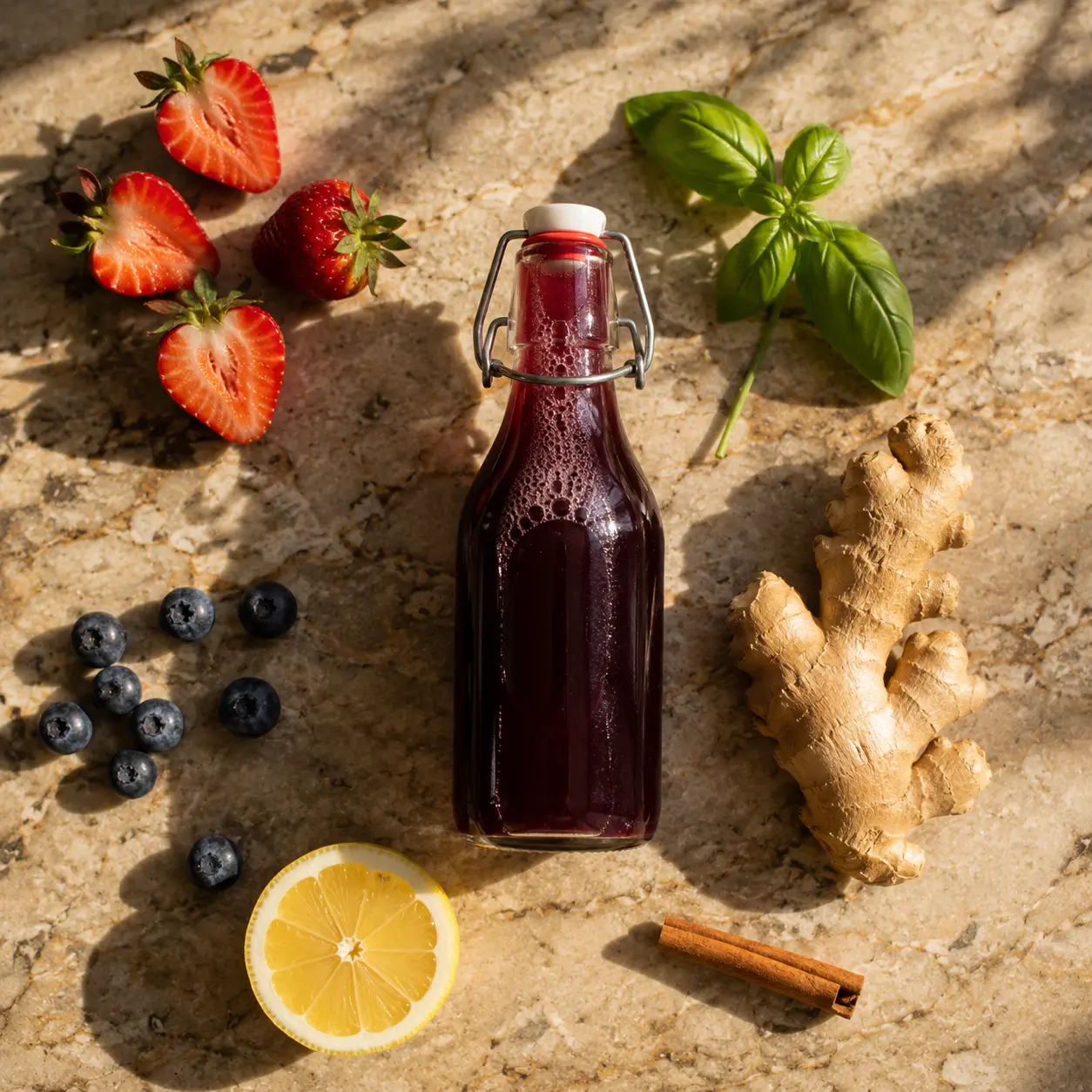
How Flavouring Works: Second Fermentation
Before we get into the combinations, a quick note on process. Most flavouring happens during second fermentation (F2) — after you’ve removed the SCOBY and bottled your kombucha.
You add your flavourings to the sealed bottle, leave it at room temperature for 1–4 days, then refrigerate. The residual yeast consumes the sugar in your fruit or juice, producing carbonation and infusing the flavour into the liquid. The result is a fizzy, flavoured kombucha that’s far more interesting than the plain version.
The longer you leave it, the more carbonated and less sweet it gets. The exact timing depends on your kitchen temperature — warmer rooms ferment faster. Finding your personal sweet spot takes a few batches, but that’s part of the fun. flavouring only works once you’ve got the first fermentation right.
It’s also worth knowing that second fermentation slightly changes the probiotic balance of your kombucha — the continued fermentation shifts the microbial composition — but the drink remains a genuinely probiotic beverage throughout. The effect on beneficial bacteria is minimal for typical F2 durations.
The Classics — Tried, Tested, Reliable
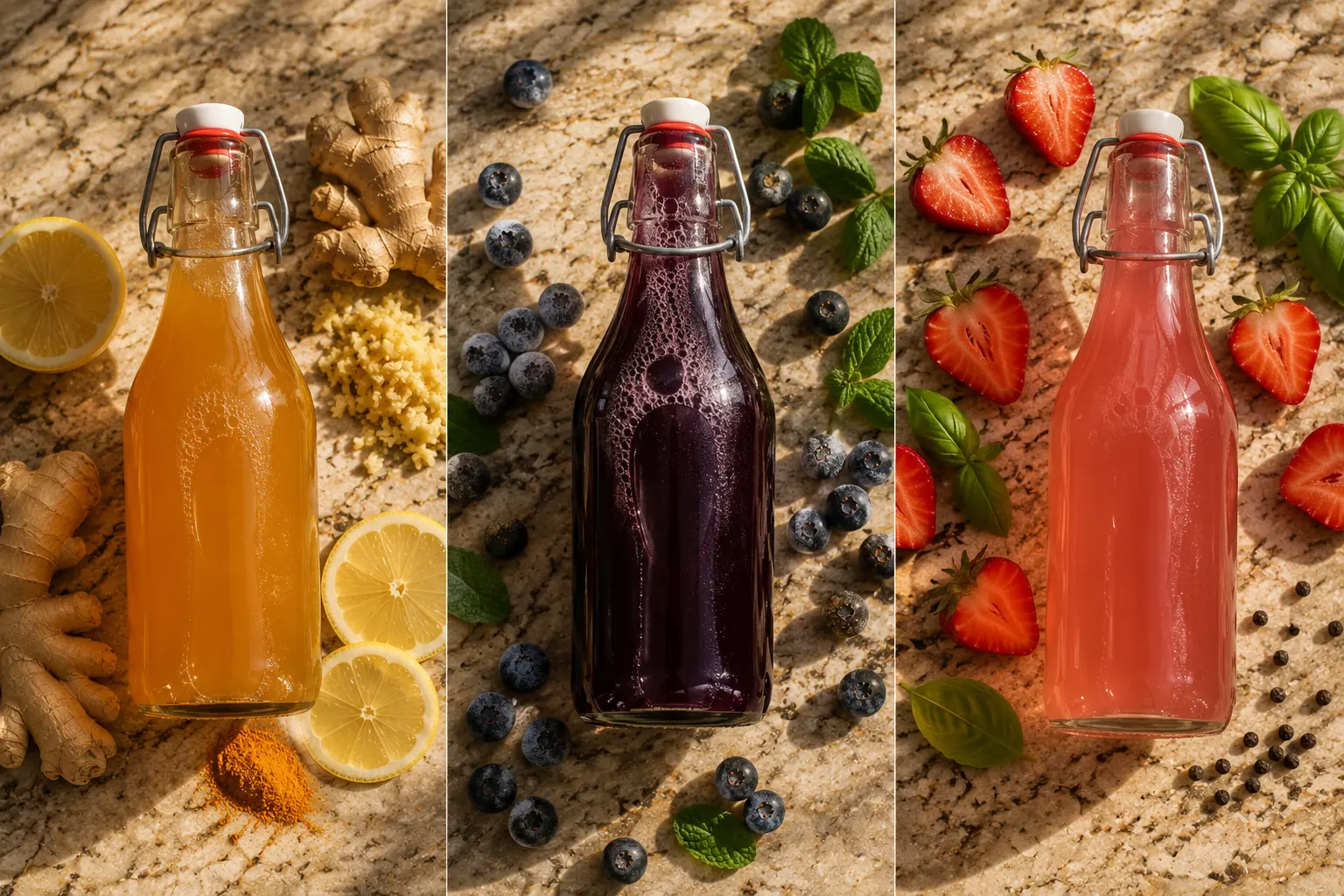
🫚 Ginger + Lemon
The most popular combination for a reason — and the best-seller at my Tel Aviv coffee shop without exception. Ginger adds warmth and a slight heat, lemon adds brightness and cuts through the tartness of the kombucha base in a way that makes the whole thing taste cleaner and more refreshing.
Use fresh ginger root, not powder — about 1–2 teaspoons grated per 500ml bottle, plus a squeeze of fresh lemon or 2–3 thin lemon slices. Powder doesn’t infuse the same way and leaves a slightly dusty aftertaste. This combination works with almost any tea base, but I prefer it with black tea — the boldness of the base stands up well to the ginger heat.
F2 timing: 2–3 days at room temperature. Best tea base: black or green. Tip: add a tiny pinch of turmeric for colour and an anti-inflammatory boost without changing the flavour noticeably.
🫐 Blueberry
One of my personal favourites — simple, reliable, and visually stunning. Blueberries add a deep, slightly jammy sweetness and turn the kombucha a beautiful purple-blue colour that people always comment on. The anthocyanins in the skin are what create the colour, and they’re also potent antioxidants.
Use fresh or frozen — about 2 tablespoons per 500ml bottle, lightly muddled or just dropped in whole. Frozen actually works slightly better than fresh because freezing breaks down the cell walls, releasing more juice and flavour into the kombucha. Pairs particularly well with a green tea base, which lets the blueberry flavour shine without competition.
F2 timing: 2–3 days. Best tea base: green. Tip: add a few fresh mint leaves for a blueberry-mint variation that’s especially good in summer.
🍓 Strawberry + Basil
This one surprised me when I first tried it — I was skeptical about basil in kombucha. But the basil adds an herbal, slightly peppery note that plays off the sweetness of the strawberry in a way that’s genuinely sophisticated. Without the basil, it’s just sweet. With it, it’s interesting.
Use 3–4 fresh strawberries, sliced, and 2–3 fresh basil leaves per 500ml bottle. Don’t substitute dried basil — it turns bitter during fermentation. The strawberries should be ripe and fragrant; underripe strawberries have too little sugar and the flavour doesn’t transfer well. I’ve made this batch probably 30 times and it’s never failed.
F2 timing: 2–3 days. Best tea base: green or white. Tip: a few black peppercorns alongside the basil amplifies the herbal quality if you want to push it further.
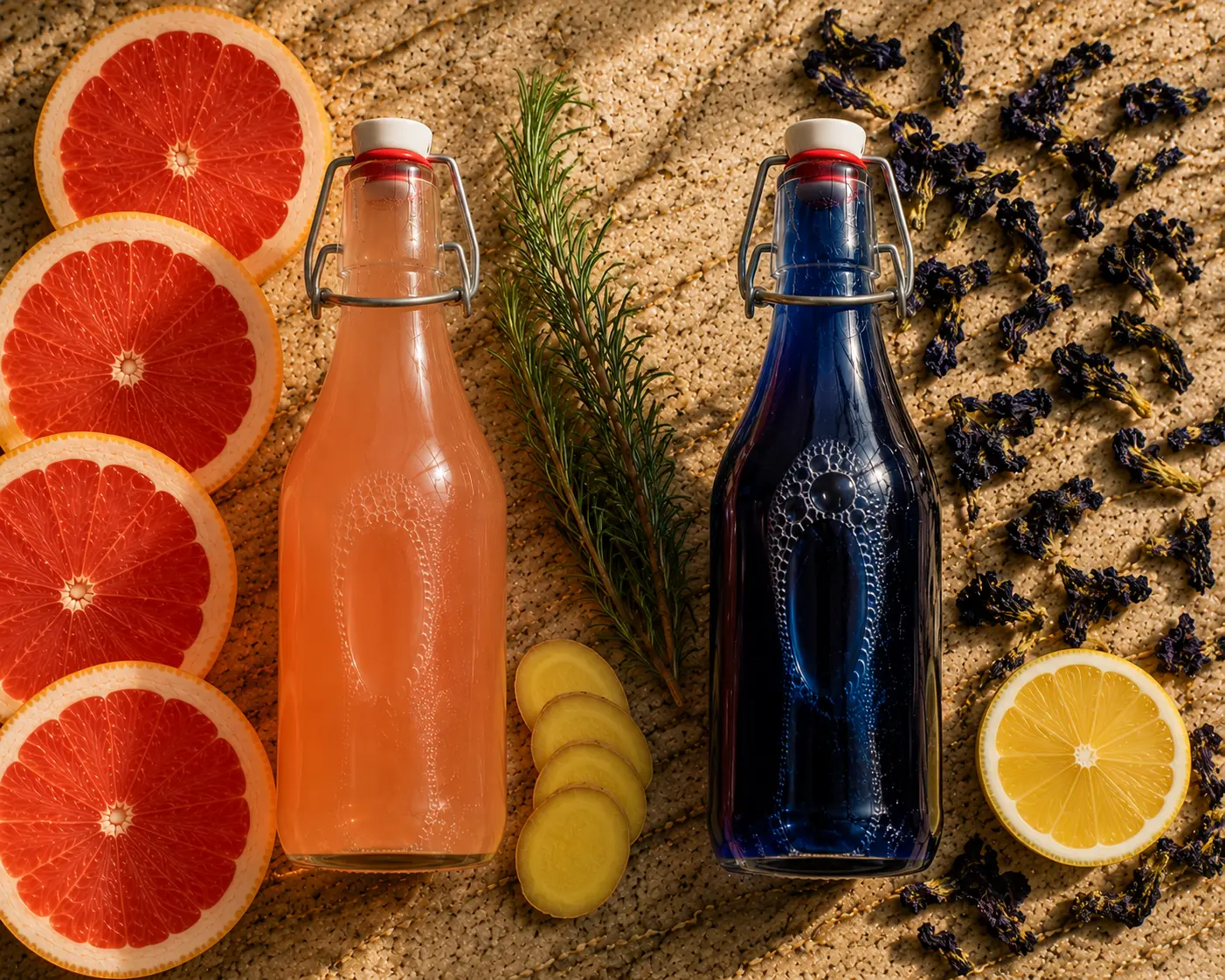
🍋 Grapefruit + Rosemary
Bitter, herbal, complex — this is a grown-up flavour that doesn’t appeal to everyone, but the people who love it really love it. The bitterness of the grapefruit and the resinous quality of rosemary create something that tastes almost like a botanical aperitif. Served chilled in a wine glass, it genuinely impresses.
Use 3–4 thin grapefruit slices (with rind — the rind carries the oils that make it interesting) and one sprig of fresh rosemary per 500ml bottle. Best with a black tea base, which has the body to stand up to these strong flavours. Don’t use dried rosemary — it turns slightly medicinal during fermentation.
F2 timing: 2 days maximum — the rosemary can become overpowering past that. Best tea base: black. Tip: a small piece of fresh ginger alongside the rosemary adds a welcome warmth that ties everything together.
🍍 Pineapple + Coconut
Tropical, approachable, and great for people who find plain kombucha too tart. The pineapple provides natural sweetness and bromelain enzymes that add an interesting dimension to the fermentation — the enzymes interact with the proteins in the kombucha culture in ways that subtly affect the texture and mouthfeel.
Use fresh pineapple chunks — about 3 tablespoons per bottle — and a tablespoon of toasted coconut flakes or a splash of coconut water. Canned pineapple in juice (not syrup) also works in a pinch, but fresh produces noticeably better carbonation. Avoid coconut milk — the fat content interferes with fermentation and creates an unpleasant texture.
F2 timing: 2–3 days. Best tea base: green or white. Tip: a small slice of fresh lime alongside the pineapple sharpens the whole flavour profile and adds an extra layer of citrus complexity.
More Adventurous — Worth Trying
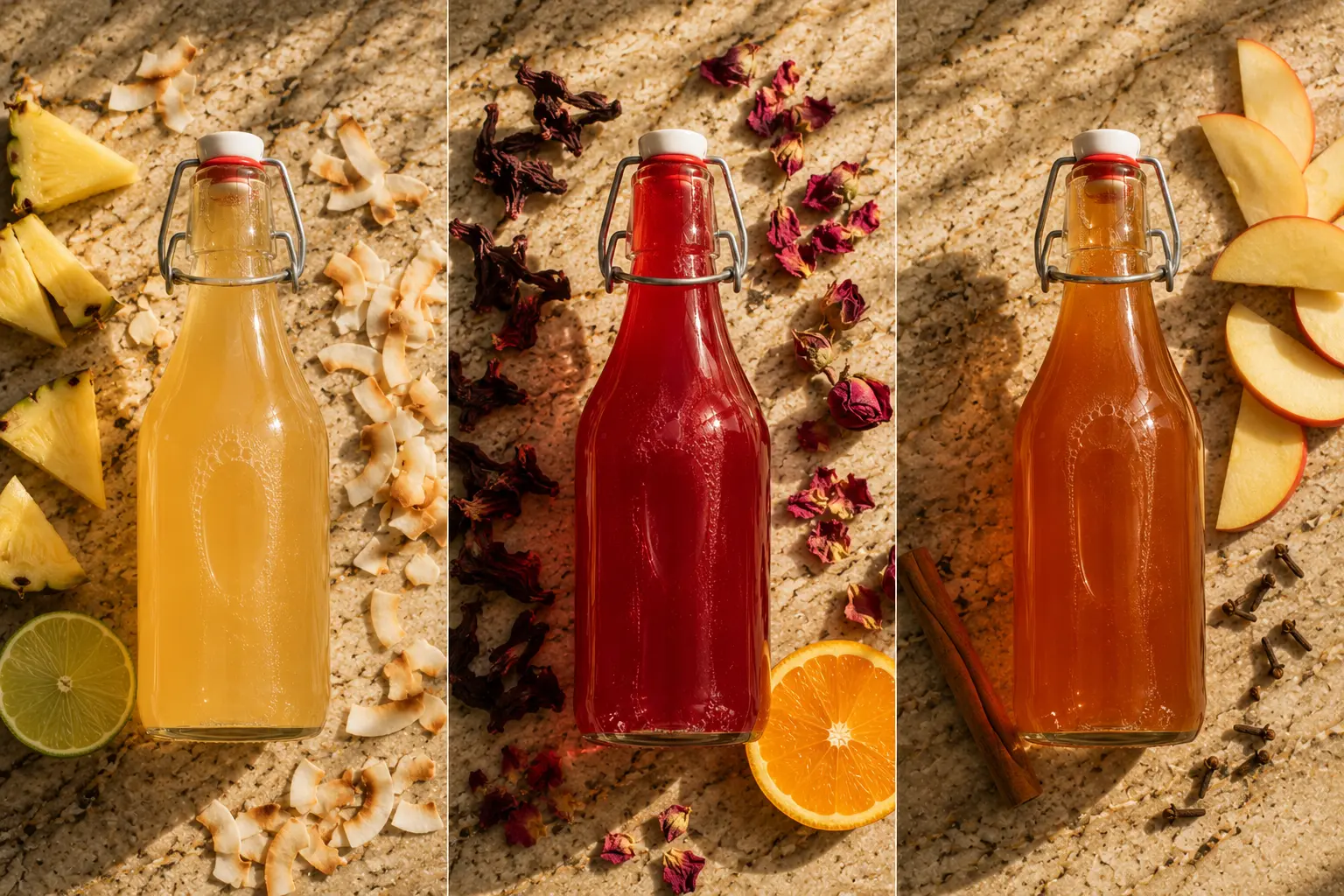
🌹 Hibiscus + Rose
Floral, tart, and visually the most striking kombucha you can make. Hibiscus turns the liquid a vivid, deep crimson that looks almost like wine in the glass. The flavour is intensely tart and floral — more aggressive than most fruit combinations — which is exactly what makes it special.
Use 1 tablespoon of dried hibiscus flowers and a small pinch of dried rose petals per 500ml bottle. The rose is subtle — just enough to add a floral background note without making it smell like potpourri. This is one combination where dried ingredients actually work better than fresh. Be careful with timing — hibiscus ferments fast.
F2 timing: 1–2 days maximum. Best tea base: green or white. Tip: a squeeze of orange juice balances the tartness of the hibiscus and adds a complementary citrus note. This combination served over ice with a slice of orange is extraordinary.
🍎 Apple + Cinnamon
Autumn in a bottle — warm, familiar, and one of the most forgiving combinations for beginners. The apple provides natural sweetness and good carbonation sugars, while the cinnamon adds a background warmth that develops beautifully over the fermentation period. It tastes vaguely like a sparkling apple cider with a probiotic twist.
Use 4–5 thin apple slices (skin on — the skin carries flavour and natural yeast) and one small cinnamon stick per 500ml bottle. Don’t use ground cinnamon — it doesn’t dissolve properly and makes the kombucha look murky. Any apple variety works, but sweeter varieties like Fuji or Honeycrisp produce the best results. Tart varieties like Granny Smith push the overall acidity too far.
F2 timing: 2–4 days — very forgiving if you leave it a day longer. Best tea base: black or green. Tip: a few cloves alongside the cinnamon push this into mulled cider territory for an even more autumnal flavour.
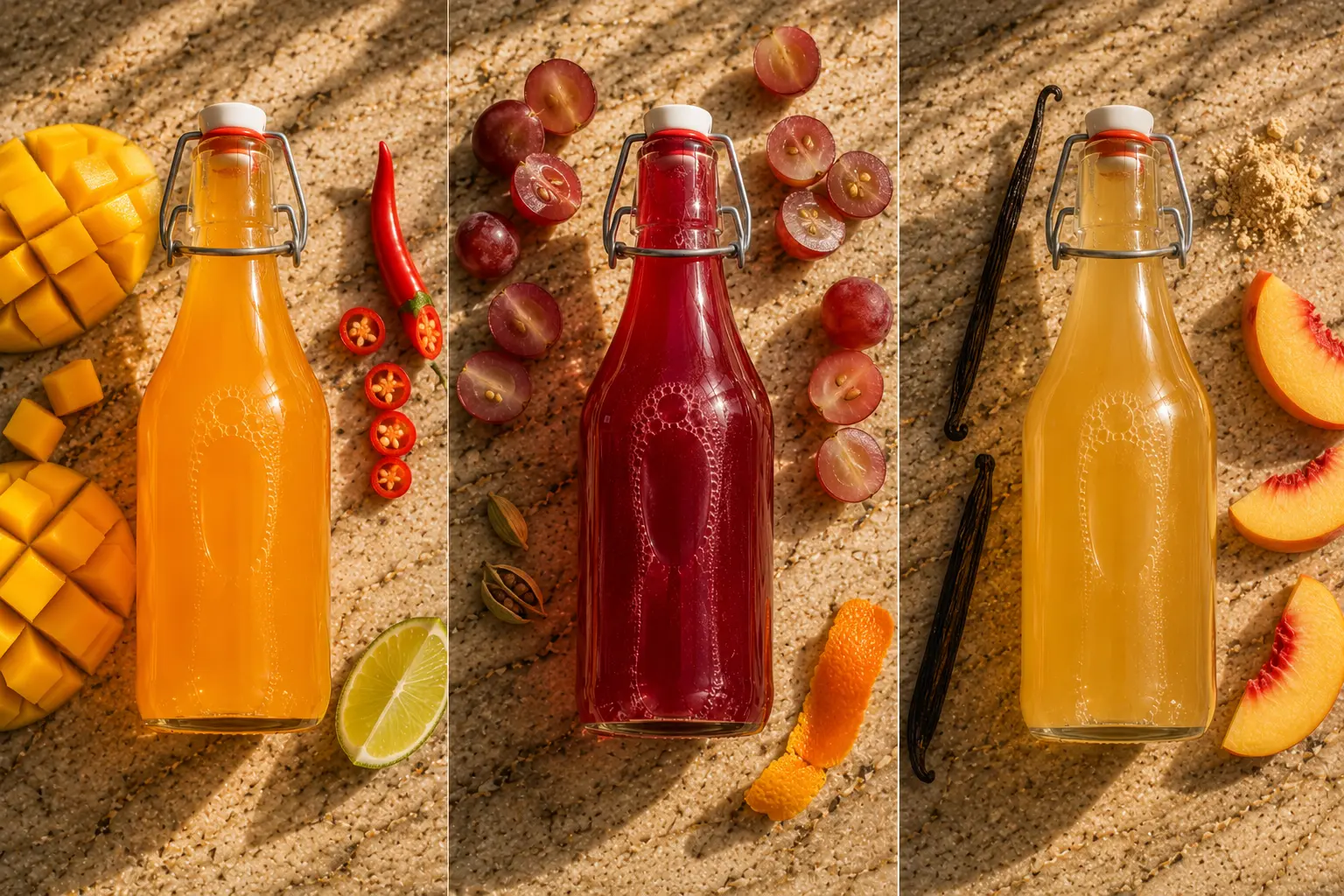
🥭 Mango + Chilli
This combination divides people sharply — you either love it or you don’t understand it. I love it. The sweetness of the mango and the slow, building heat of the chilli create a contrast that’s genuinely addictive, especially on a hot day. It’s also one of the most impressive flavours to serve to people who think kombucha is boring.
Use 2 tablespoons of fresh or frozen mango chunks and a thin slice of fresh red chilli with seeds removed per 500ml bottle. The seeds carry most of the capsaicin — removing them gives you heat without pain. Start cautious your first time — you can always add more chilli next batch, but you can’t remove it once it’s in. Frozen mango works especially well here because it releases juice evenly.
F2 timing: 2–3 days. Best tea base: green. Tip: a squeeze of lime juice alongside the mango adds a tartness that balances the sweetness and makes the chilli heat more pronounced without adding more chilli.
🍇 Grape + Cardamom
Sophisticated and unexpected — this is one of those combinations that sounds strange until you taste it. Red grapes provide sweetness and natural sugars that carbonate exceptionally well, while cardamom adds an aromatic, almost perfumed warmth that lingers on the finish. It tastes like something you’d find in a high-end fermented drinks bar.
Use 8–10 red grapes, halved (halving releases the juice) and 2 cardamom pods, lightly crushed per 500ml bottle. Don’t use more than 2 pods — cardamom is potent and quickly becomes medicinal in large quantities. Green grapes work too but produce a lighter, less complex result. Best with a green or white tea base that doesn’t compete with the delicate cardamom note.
F2 timing: 2–3 days. Best tea base: green or white. Tip: a small strip of orange peel alongside the cardamom adds a complementary citrus note that makes the whole thing smell incredible when you open the bottle.
🍑 Peach + Vanilla
One of the most universally crowd-pleasing combinations I’ve made across hundreds of batches. The peach provides a gentle, fragrant sweetness — not cloying, just ripe and summery — while the vanilla adds a smooth, creamy background note that makes the whole thing feel luxurious. People who try this for the first time almost always ask for the recipe.
Use 3–4 fresh peach slices (skin on) and half a vanilla pod, split lengthways per 500ml bottle. Scrape the seeds into the bottle along with the pod — the seeds carry most of the flavour. Vanilla extract works as a substitute (3–4 drops per bottle) but the flavour is less complex. Works best with white tea, which has a delicate flavour that complements rather than competes.
F2 timing: 2–3 days. Best tea base: white or green. Tip: a small pinch of ground ginger alongside the vanilla adds a subtle warmth that elevates the whole combination from pleasant to memorable.
🦋 Butterfly Pea Flower
This one is more of a showpiece than a flavour combination — the colour-changing magic is the point. Butterfly pea flower turns your kombucha a deep indigo-blue in the bottle, then dramatically shifts to purple or vivid pink the moment you add citrus — a reaction caused by pH-sensitive anthocyanin pigments responding to the acid. It’s genuinely extraordinary to watch.
Use 1 tablespoon of dried butterfly pea flowers per 500ml bottle. The flavour is mild and earthy on its own — slightly vegetal — which is why serving it with a slice of lemon or lime on the side (added at the table) works so well. The colour change happens instantly and never fails to impress. I’ve written a full dedicated guide on butterfly pea kombucha with step-by-step instructions and troubleshooting.
F2 timing: 1–2 days. Best tea base: green or white. Tip: serve in clear glasses and squeeze the citrus at the table in front of your guests — the colour change from blue to pink happens in seconds and is one of the most visually spectacular things you can do with home-brewed kombucha.
Things I’ve Tried That Didn’t Work
In the interest of honesty — because you’ll find plenty of sites recommending things they’ve never actually tried:
Fresh cucumber: Sounds refreshing, tastes like nothing. The subtle flavour of cucumber completely disappears during fermentation. Save it for your water.
Banana: Turns to mush, makes the kombucha cloudy with an odd, starchy texture. The flavour doesn’t transfer well either. Avoid entirely.
Dried fruit only: Too sweet, ferments unevenly, and the texture of rehydrated dried fruit in your bottle is unpleasant. Use fresh or frozen where possible.
Lavender (too much): A little is lovely. A lot tastes like soap or a candle shop. Maximum half a teaspoon of dried lavender per 500ml bottle — treat it like a spice, not a fruit.
Watermelon: Looked beautiful, tasted bland. The high water content dilutes everything and the subtle flavour doesn’t survive fermentation. Best enjoyed fresh, not fermented.
Turmeric alone: Earthy and medicinal on its own. If you want turmeric, pair it with ginger and black pepper — that combination actually works and has the added benefit of improved curcumin absorption.
Tips That Actually Make a Difference
- Use ripe fruit — more natural sugar means better carbonation and more pronounced flavour
- Fresh beats juice for most fruits — juice over-sweetens and under-carbonates
- Leave 2–3cm headspace in the bottle to allow for carbonation buildup without overflow
- Burp your bottles daily during F2 in warm weather — over-pressurisation is real and can make a mess
- Taste before sealing: your base kombucha’s acidity affects everything — a sharper base needs sweeter fruit to balance
- Keep a brewing notebook: it’s impossible to replicate a great batch if you can’t remember what you put in it. I use a simple spreadsheet with batch number, ingredients, and days of F2
- Try small batches first: if you have four bottles from one batch, use three familiar flavours and one experiment
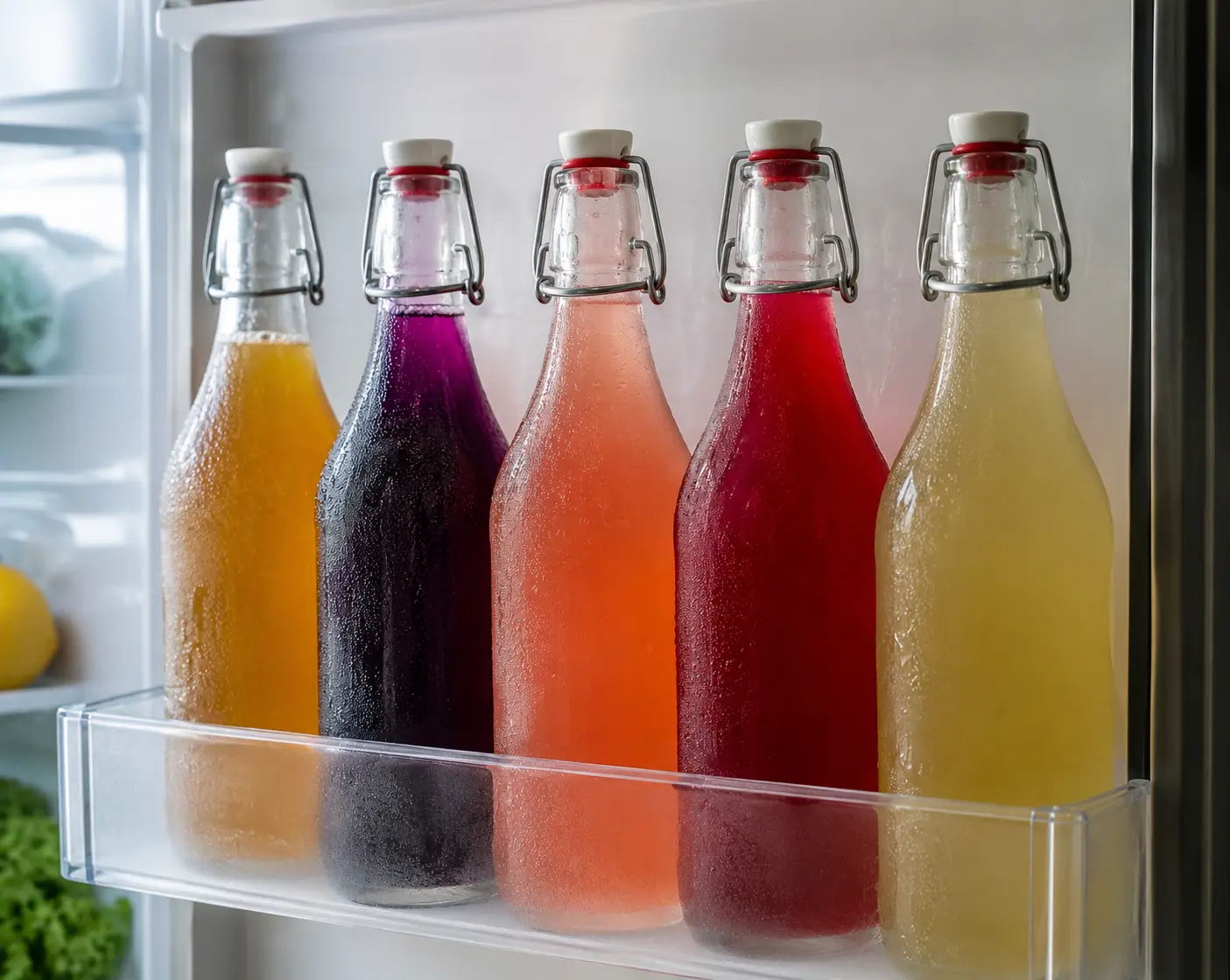
The Best Way to Find Your Favourite
Brew a batch, bottle it in four or five separate bottles, and try a different flavour in each. Taste them after two days and again after four. You’ll learn more from one experimental batch than from reading a hundred guides — including this one.
The combinations here are starting points. Once you understand how different fruits and aromatics behave during fermentation, you’ll start inventing your own. Some of my best batches have come from using whatever was going soft in the fruit bowl.
For more on the full brewing process that makes all of this possible, read my guide on how to brew kombucha at home. And if you’ve mastered regular flavouring and want to go further, hard kombucha is the next level — same flavouring principles, with added yeast for higher alcohol content.
Frequently Asked Questions
Q: What is the most popular kombucha flavour?
A: Ginger lemon is consistently the most popular — at my coffee shop and in commercial sales data globally. It’s balanced, familiar, and works with any tea base. If you’re making kombucha to share with people who’ve never tried it before, start here.
Q: Can I use juice instead of fruit?
A: Yes, but use it sparingly — about 20–30ml per 500ml bottle. Too much juice over-sweetens and can suppress carbonation by overwhelming the remaining yeast. Fresh fruit generally produces better carbonation and more complex flavour than juice.
Q: How long should I do second fermentation?
A: 2–4 days at room temperature is typical. Less time in summer (warmer = faster fermentation), more in winter. Always taste before refrigerating — the right time is when it tastes how you want it, not when the calendar says so.
Q: Can I flavour kombucha without doing a second fermentation?
A: Yes — just add flavouring directly to the glass before drinking. You won’t get the same depth of flavour or natural carbonation, but it works fine for experimenting without committing a whole bottle. This is also a good option if you want to avoid the extra alcohol that F2 produces.
Q: Does flavouring affect the probiotic content?
A: Slightly. The continued fermentation during F2 changes the microbial balance, but kombucha remains a probiotic drink throughout. The beneficial bacteria shift somewhat as the environment becomes more acidic, but for typical 2–4 day F2 durations the effect is minimal. Refrigerating promptly after F2 slows any further changes.
Q: How much fruit should I use per bottle?
A: A good starting point is 2–3 tablespoons of fresh or frozen fruit per 500ml bottle. For aromatics like ginger, herbs, or spices, use much less — 1–2 teaspoons of ginger, 2–3 herb leaves, or a small spice piece. You can always increase next batch; it’s harder to fix an over-flavoured bottle.