
✍️ Written & Updated by Ofir The Fermenter · 📅 June 20, 2026

One of the things I find most fascinating about kombucha is how old it is. When I’m standing in my kitchen in Tel Aviv watching a SCOBY do its thing, I’m participating in a tradition that’s at least 2,000 years old — probably longer. The origin of kombucha isn’t a single story. It’s several legends, trade routes, and a drink that reinvented itself as it crossed continents.
The Chinese Beginning — 220 BC
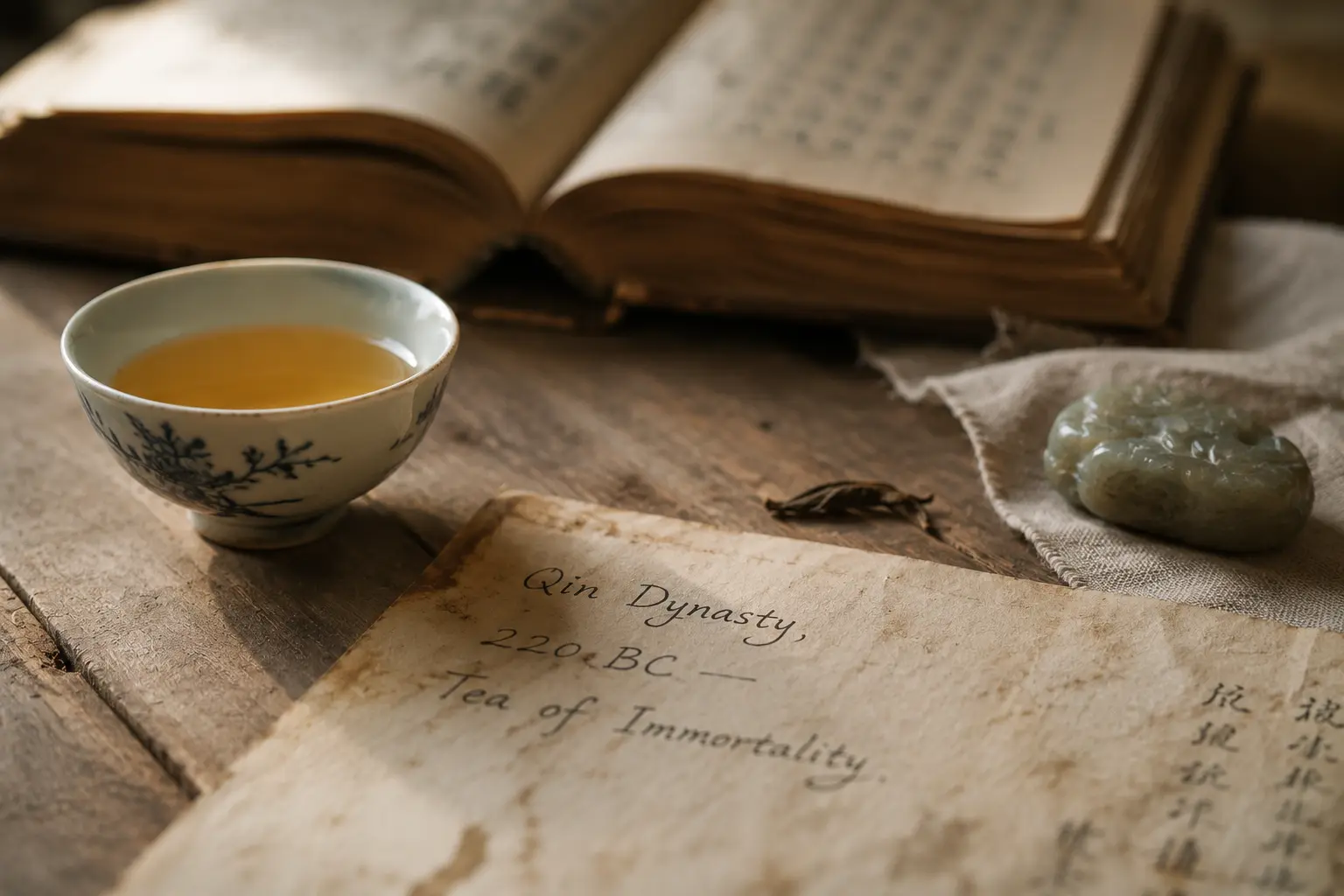
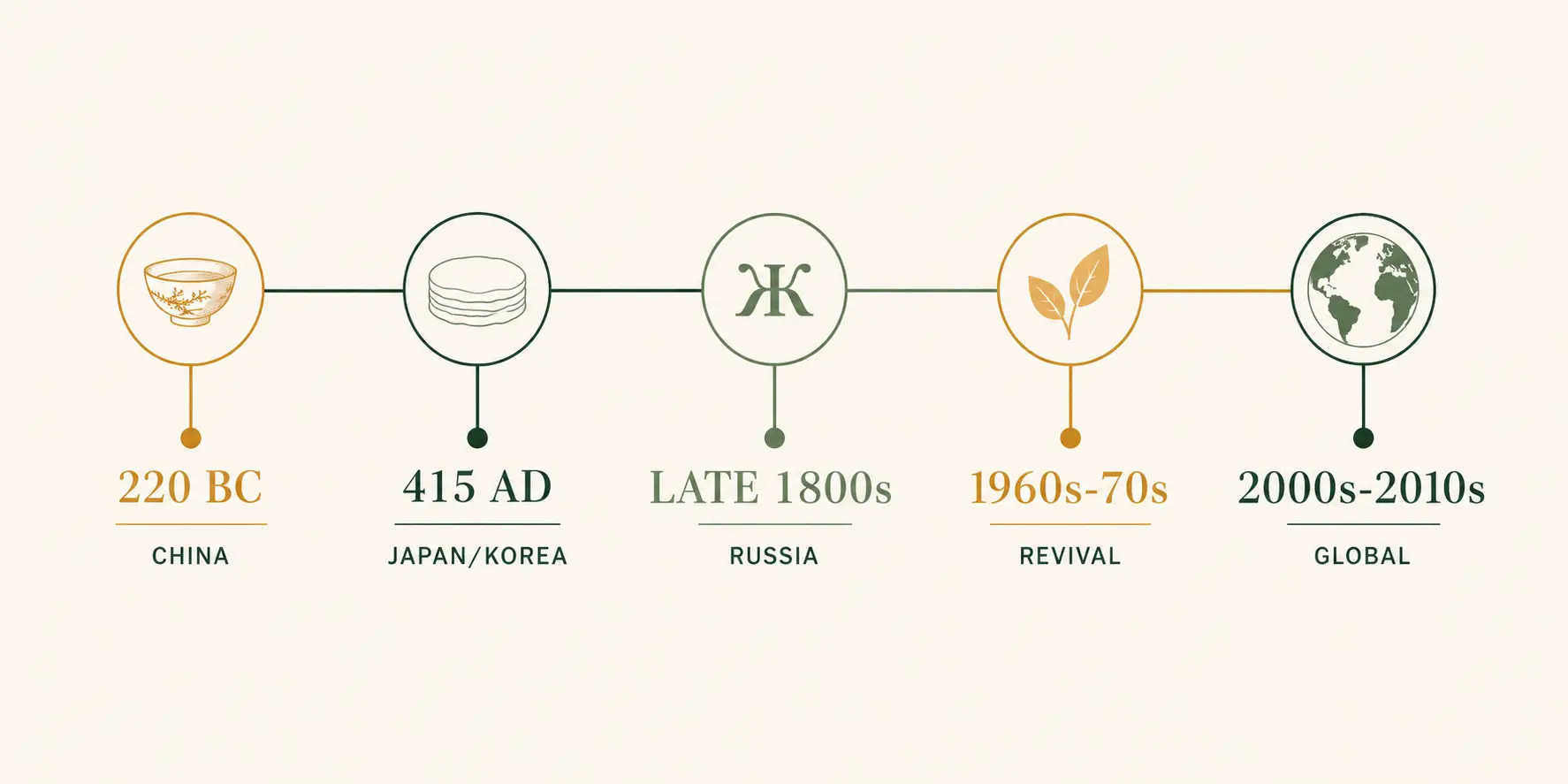
The most widely accepted origin story places kombucha in northeastern China around 220 BC, during the Qin Dynasty. It was reportedly brewed for Emperor Qin Shi Huang — the same emperor who built the Great Wall — and called the “Tea of Immortality” or “Divine Tsche.”
Whether the emperor himself drank it or his alchemists experimented with fermented teas remains unclear. What’s certain is that fermented tea beverages were embedded in Chinese culture long before the rest of the world encountered them.
The name “kombucha” is interesting. In Japanese, kombu refers to kelp seaweed and cha means tea. The drink we know as kombucha doesn’t contain seaweed — so the etymology is disputed. One theory: a Korean physician named Kombu brought fermented tea to Japan around 415 AD, and the name stuck.
The Spread East — Korea and Japan
From China, the drink moved eastward through Korea and Japan, developing its own regional fermented tea traditions. Japan’s connection to the name persists in Western usage — most English speakers call it “kombucha” even though the drink is virtually unrecognizable from traditional Japanese kombucha, which is typically kelp tea without a SCOBY.
The Journey West — Russia and Eastern Europe
This is where the historical record becomes solid. Kombucha entered Russia and Eastern Europe in the late 19th century, likely through Asian trade routes. Russians called it Čajnyj grib — literally “tea mushroom” — a reference to the SCOBY’s appearance.
By the early 1900s, kombucha was widespread in Russian households. During the Soviet era, when imported goods were scarce, home-brewed kombucha became a staple. People shared SCOBYs with neighbors and family — the same way people share sourdough starters today.
Germany and other Central European countries developed their own traditions around the same period, calling it Kombuchaschwamm or “tea fungus.”
The Near-Disappearance — and the Revival

Kombucha’s popularity collapsed in Europe after World War II. As tea and sugar became constrained and commercial soft drinks dominated, kombucha faded from mainstream culture for several decades.
The first revival came in the 1960s and 70s, when interest in natural health and fermented foods brought kombucha back to niche circles. The second wave — much larger — arrived in the 2000s and 2010s, when the gut health movement and probiotic awareness turned kombucha into a mainstream product.
Today it’s a global industry. The SCOBY in my kitchen is, genetically speaking, probably not that different from one fermenting tea in a Chinese household 2,000 years ago.
Why the History Matters
Understanding kombucha’s origin changes how you relate to it. It’s not a wellness trend invented by a startup — it’s a living fermented culture humans have passed between each other across centuries and continents because it works.
That track record matters more to me than any clinical study. If you want to understand what kombucha does for your body, the health guide covers the science. And if you want to start your own brewing tradition, my complete guide walks you through it.
Frequently Asked Questions
Where did kombucha originally come from?
The most commonly cited origin is China, around 220 BC, during the Qin Dynasty. From there it spread through Korea, Japan, Russia, and eventually the rest of the world.
Why is it called kombucha?
The etymology is disputed. The most popular theory involves a Korean physician named Kombu who brought fermented tea to Japan. In Japanese, “cha” means tea — hence “kombu-cha.” The name stuck in the West, even though it differs from what Japanese people call kombucha.
How long has kombucha been drunk?
At least 2,000 years, possibly longer. Fermented tea cultures appear in Chinese records dating to around 220 BC.
When did kombucha become popular in the West?
It entered Eastern Europe via trade routes in the late 19th century. It became mainstream in the West in the 2000s and 2010s with the growth of the gut health movement.
Has kombucha always been made the same way?
The core process — fermenting sweetened tea with a SCOBY — has remained consistent for centuries. What’s changed is the tea types, flavorings, fermentation vessels, and commercialization. The biology is the same.
The Living Tradition
Every batch of kombucha you brew is connected to that 2,000-year history. The SCOBY you feed today may be a direct descendant of cultures passed between brewers for generations. You’re not just making a beverage — you’re continuing one of humanity’s oldest fermentation traditions.