

How much kombucha you should drink in a day comes down to one principle I had to learn the hard way: your gut sets the pace, not your enthusiasm. For most healthy adults the safe range lands between 4 and 12 ounces — but the more useful question is where you start, how fast you climb, and where that “official” number even comes from (almost no article explains it correctly).
Early in my brewing years I got cocky with a batch I was proud of — batch #7, perfectly fizzy and tart — and put away close to 32 ounces in an afternoon. I spent that evening regretting it. Six years and 500+ batches later, here’s the approach that actually works for most people, and the context that makes the numbers make sense.
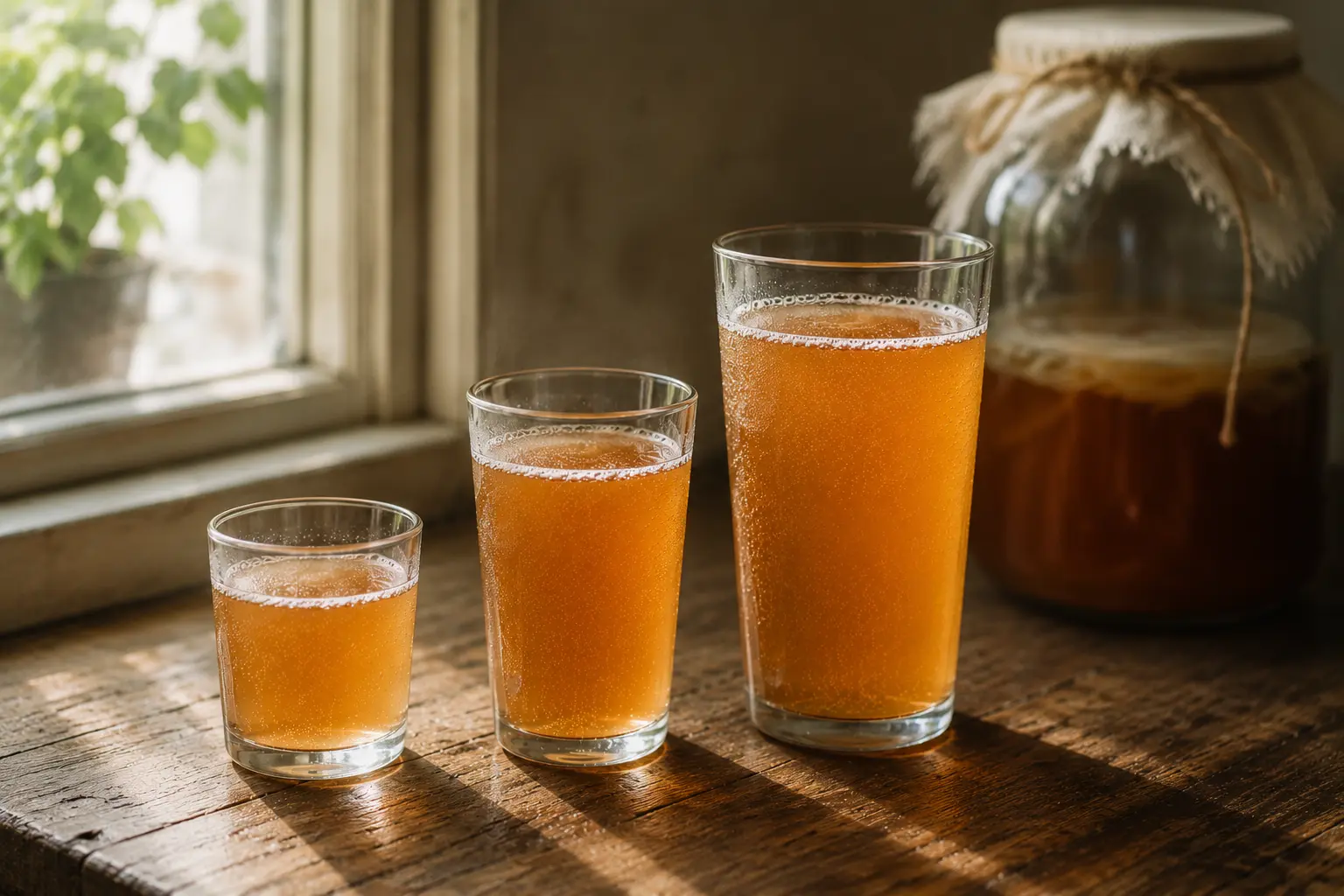
The Sweet Spot: 4–12 Ounces Daily
For most adults, 4–12 ounces of kombucha per day hits the balance between getting the benefits and avoiding the side effects. That gives you a meaningful dose of probiotics and organic acids without flooding your system with acidity, sugar, or caffeine.
It helps to treat kombucha as a functional drink rather than a casual one. Unlike water or plain tea, it contains active compounds that act on your body — acetic acid (the vinegar tang), gluconic acid, and live cultures dominated by Acetobacter and various yeasts, with some lactic acid bacteria depending on the brew. These temporarily interact with your existing gut microbiome, which is exactly why ramping up slowly matters.
Where the “4 Ounces” Number Actually Comes From
Here’s the part almost every article gets wrong. The famous “4 ounces, one to three times a day” figure isn’t a modern endorsement — it traces back to a 1995 CDC case report. After two people in Iowa became seriously ill following heavy daily kombucha drinking, the CDC noted that roughly 4 ounces “may not cause adverse effects in healthy persons.” That’s a *caution* born from an adverse-event investigation, not a recommended dose.
Modern dietitians land in a similar place for different reasons. As the registered dietitians at the Cleveland Clinic put it, kombucha contains acids, caffeine, sugar, and a little alcohol, so moderation — starting around 4 ounces and building up — is the sensible approach. So when you see “4–12 oz/day,” read it as “a moderate, well-tolerated range,” not a clinical prescription. That distinction matters, and it’s worth knowing before you take any number as gospel.
Starting Out: The 4-Ounce Rule for Beginners
If you’re new to kombucha, start with just 4 ounces (about half a cup) daily for the first week. I can’t stress this enough — your gut needs time to adjust to the new bacterial strains and the acidity.
Physiologically, introduced cultures compete with your existing gut bacteria for resources and attachment sites along the intestinal wall. Flood the system too fast and you may get bloating, gas, or general discomfort — not because kombucha is harmful, but because your microbiome is recalibrating. I once handed a friend a 16-ounce bottle of my ginger-turmeric brew; she drank the lot in one sitting and was bloated within hours. We scaled her back to 4 ounces, and inside a week she was comfortably at 8 ounces a day.
Here’s a simple serving guide to work from:
The Upper Limit: Why More Isn’t Always Better
I generally don’t recommend exceeding 16 ounces a day unless you’re doing it with a healthcare provider for a specific reason. There are three practical ceilings.
First, sugar adds up. Even well-fermented kombucha runs about 2–6 grams of residual sugar per 8-ounce serving — far less than soda’s 25+ grams, but at 32 ounces a day you’re still adding 8–24 grams from kombucha alone.
Second, caffeine. Because it’s made from tea, kombucha carries a small amount — but the numbers are lower and more variable than most people assume. Depending on the tea and ferment, an 8-ounce serving typically lands somewhere around 5–25 mg (some commercial brands test as low as 4 mg, a few as high as 40 mg) — well under a cup of coffee’s ~95 mg. You’d have to drink an unrealistic amount to approach a caffeine problem, but it’s worth knowing if you’re sensitive. I’ve broken the numbers down further in my guide to how much caffeine is actually in kombucha.
Third, trace alcohol — typically 0.5–3% depending on fermentation time. Generally considered non-alcoholic, but at large volumes it’s a real consideration for some people and certain medications.
Individual Factors That Affect Your Ideal Amount
Your personal sweet spot may differ from the general range based on a few things I’ve seen in my own brewing and across the community.
Body Weight and Metabolism
A 120-pound (54 kg) person will likely feel 12 ounces more than a 200-pound (91 kg) person. I’m on the smaller side (135 lb / 61 kg), and my comfort zone sits around 8 ounces a day. My brewing partner, who’s considerably larger, happily drinks 12–16.
Gut Health Status
If you’re dealing with digestive issues or you’ve recently finished antibiotics, you might benefit from a bit more — say 8–12 ounces split into two servings — to help rebuild gut flora. But people with SIBO (small intestinal bacterial overgrowth) sometimes need to limit or avoid kombucha entirely. Listen to your own response over any general rule.
Fermentation Time of Your Brew
This one’s big: a 7-day ferment is a very different drink from a 21-day ferment. Longer fermentation means less sugar, higher acidity, stronger cultures, and slightly more alcohol. My shorter summer batches are noticeably gentler than my long winter ones. If your kombucha is very tart and long-fermented, stick to the lower end (6–8 ounces); a milder, shorter brew can be enjoyed at 10–12.
Timing Your Kombucha Intake
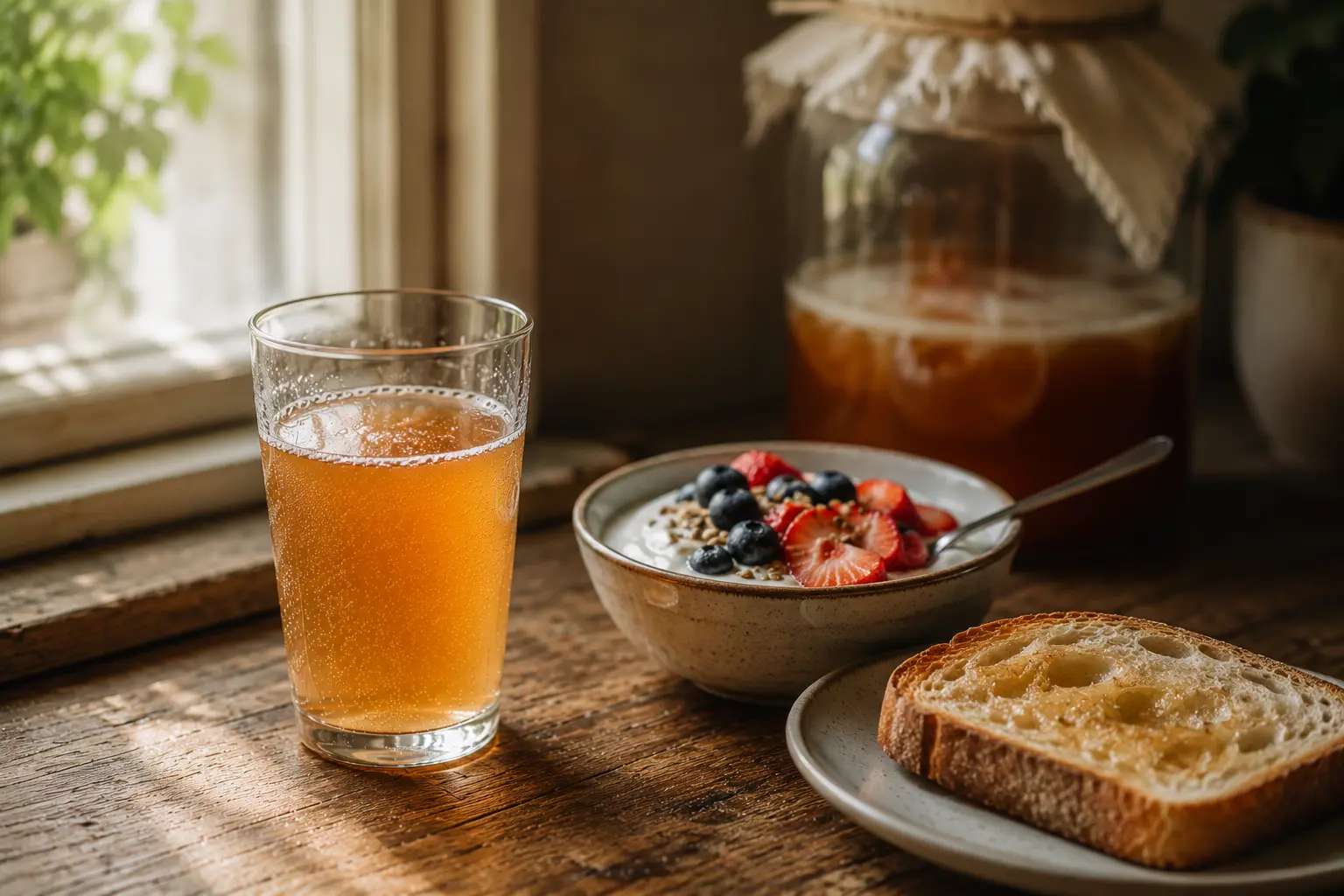
When you drink it matters almost as much as how much. My preferred approach is 8 ounces in the morning with breakfast — the food buffers the acidity and the gentle caffeine gives a small lift. Others like 4 ounces before lunch and 4 in the mid-afternoon as a soda replacement.
I avoid drinking the really tart batches on a completely empty stomach — the acidity can be harsh with nothing to buffer it — and I skip kombucha within about three hours of bed so the trace caffeine doesn’t touch my sleep. One more habit worth keeping: because kombucha is acidic, rinse your mouth with water afterward and don’t brush immediately, to protect tooth enamel.
Strategic Splitting
Rather than one big serving, try splitting your daily amount:
- Morning: 4–6 ounces with or after breakfast
- Afternoon: 4–6 ounces as a pick-me-up
This keeps a more consistent probiotic presence in your gut and stops any single dose from being too intense.
Signs You’re Drinking Too Much Kombucha
Your body will tell you when you’ve passed your limit. In my enthusiastic early days I ignored the signals — don’t repeat my mistake. Watch for:
- Digestive upset — bloating, gas, or loose stools
- Acid reflux or heartburn — the acidity irritating your esophagus
- Jitteriness — too much caffeine, especially alongside coffee
- Headaches — sometimes caffeine-related
- Trouble sleeping — late-day caffeine
If any of these show up, drop back to 4 ounces a day for a few days and see if they settle.
Special Circumstances and Precautions
Some groups should be far more conservative — or skip kombucha altogether. Because it’s unpasteurized and contains trace alcohol and caffeine, many practitioners advise pregnant and nursing women to avoid it. If that’s you, don’t take a number from a general article — read my dedicated guide on kombucha during pregnancy and talk to your OB before deciding.
People with compromised immune systems should be cautious with any live-culture food. Those with histamine intolerance may react poorly, since fermentation produces histamines. And if you take medication, ask your pharmacist — the acidity can affect how some drugs are absorbed if taken at the same time.
Making the Most of Your Daily Kombucha
To get the most from kombucha, focus on quality and consistency, not quantity. I’ve seen far better results from 8 ounces of well-made kombucha every day for months than from sporadic 24-ounce binges.
Choose or brew kombucha that tastes pleasantly tart rather than sweet (a sign of proper fermentation and lower sugar), keep a consistent daily schedule, and treat it as one helpful habit among many — not a magic bullet. It works best as part of a broader routine, which is the whole point I make in my deeper look at whether kombucha actually earns its health reputation. It shouldn’t replace water, whole foods, or sleep.
Frequently Asked Questions
Q: Can I drink 16 ounces of kombucha every day?
A: Sixteen ounces is on the high end, but many people tolerate it if they’ve built up gradually. At that volume you’re looking at roughly 10–50 mg of caffeine and 4–12 grams of sugar, so factor in your total daily intake of both. If you also drink coffee or eat sweet foods, 8–12 ounces of kombucha is the smarter ceiling. Watch for digestive upset, jitters, or disrupted sleep — those are your cues to cut back.
Q: Is it better to drink kombucha once a day or split into servings?
A: Splitting it into two servings (morning and afternoon) is generally better than one large dose. It gives your gut a steadier probiotic presence through the day and avoids hitting your system with all the acidity and live cultures at once. I usually have 4 ounces with breakfast and another 4 around mid-afternoon, which keeps the benefits sustained without any single serving feeling intense.
Q: What happens if I accidentally drink too much in one day?
A: If you go well over your usual amount — say 32 ounces or more — you may get temporary digestive upset (bloating, gas, loose stools) as your gut adjusts to the sudden influx, plus possible jitters or a mild headache from the caffeine. It typically settles within 24 hours. Drink water, eat normally, and return to your usual amount the next day. If symptoms are severe or last beyond 48 hours, see a healthcare provider.
Q: Can children drink kombucha, and if so, how much?
A: This is one to be cautious about. Because kombucha contains trace alcohol and caffeine and is unpasteurized, many practitioners recommend against giving it to young children at all, and there’s no established safe serving for kids. If you’re considering it for an older child, talk to your pediatrician first rather than relying on a general figure — they can weigh your child’s age and health. Don’t treat kombucha as a routine children’s drink.
Q: Does drinking more kombucha give more health benefits?
A: No — and it can backfire. The benefits follow a curve: moderate intake (around 8–12 ounces daily) is where the value sits, and going beyond doesn’t enhance results. Your gut can only use so many probiotics at once, excess organic acids can irritate your digestion, and more volume just means more sugar and caffeine. Consistency at a moderate amount beats chasing a bigger dose — I’ve watched people get far more from 8 ounces daily over three months than from 24 ounces here and there.
I’m a brewer, not a doctor — these are general guidelines, not medical advice. If you’re pregnant, managing a health condition, or taking medication, check with your healthcare provider before making kombucha a daily habit.
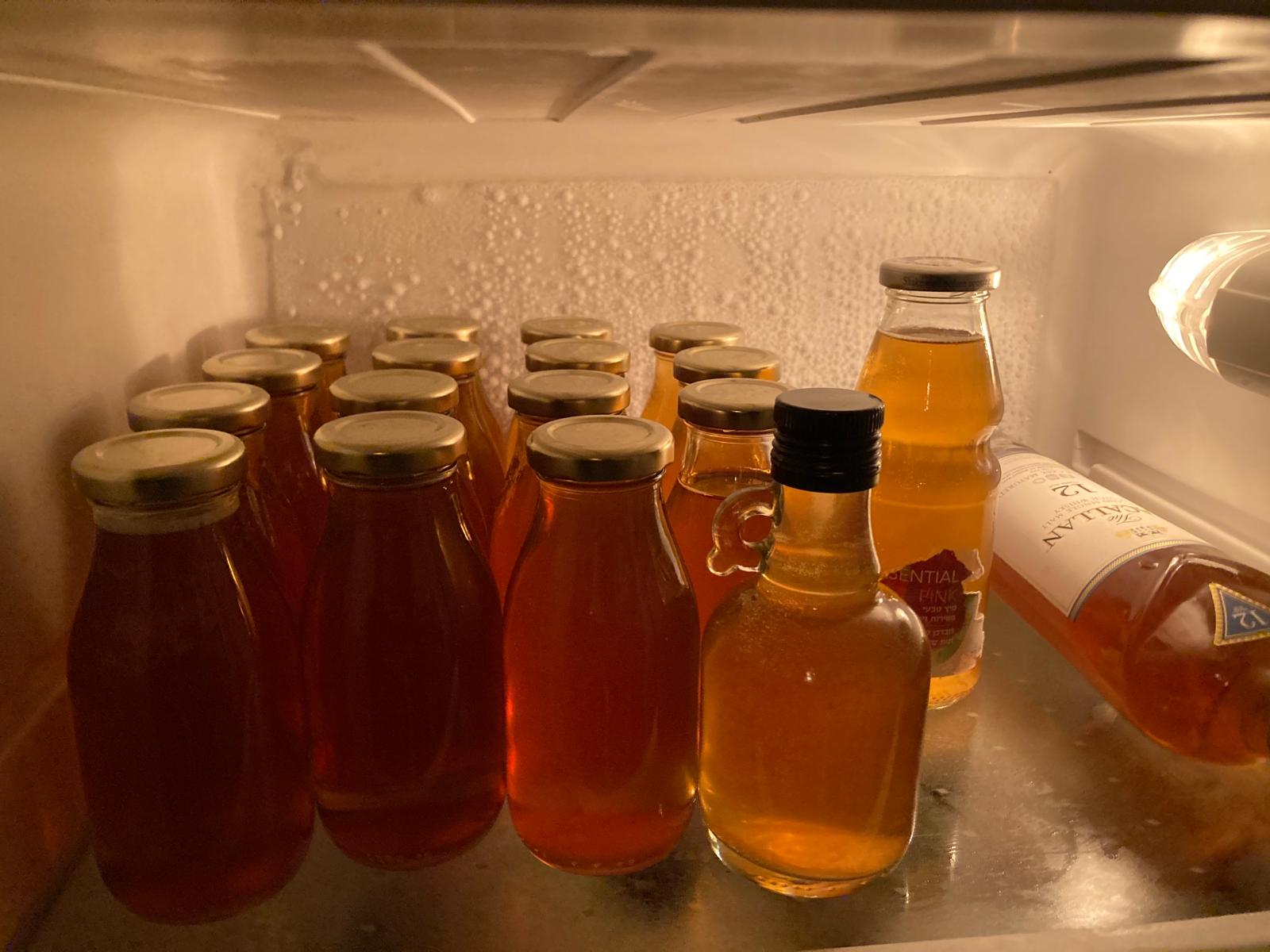
Home kombucha brewer based in Tel Aviv with 6+ years of experience and 500+ batches brewed. I started Kommbucha.com because the information online was scattered or just plain wrong — I wanted advice from someone who actually brews. My kombucha is sold at local Tel Aviv coffee shops and been gifted many times in Detroit, Michigan .