
✍️ Written & Updated by Ofir The Fermenter · 📅 September 8, 2026
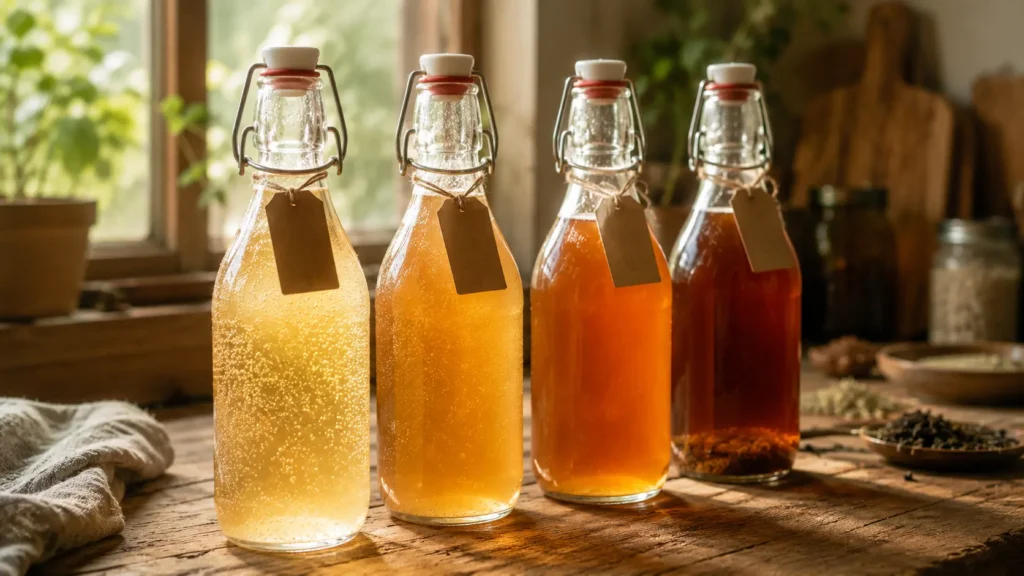
Kombucha is a living drink. That phrase gets thrown around a lot, but it actually explains everything about how long it lasts and why that “best by” date on the bottle isn’t quite the final word.
Shelf Life at a Glance
Does Kombucha Actually Expire?
Technically, no. Most kombucha bottles list a “best by” or “best before” date, not a true expiration date. That date indicates peak flavor and carbonation, not food safety.
Because kombucha is fermented and acidic, it is naturally resistant to harmful bacteria. The problem isn’t safety so much as flavor.
It’s safe to drink pretty much indefinitely as long as it’s properly brewed and stored, but that doesn’t mean you’ll want to drink it after it’s been stored for more than a year, because even if it’s refrigerated, it’ll likely taste like vinegar at that point.
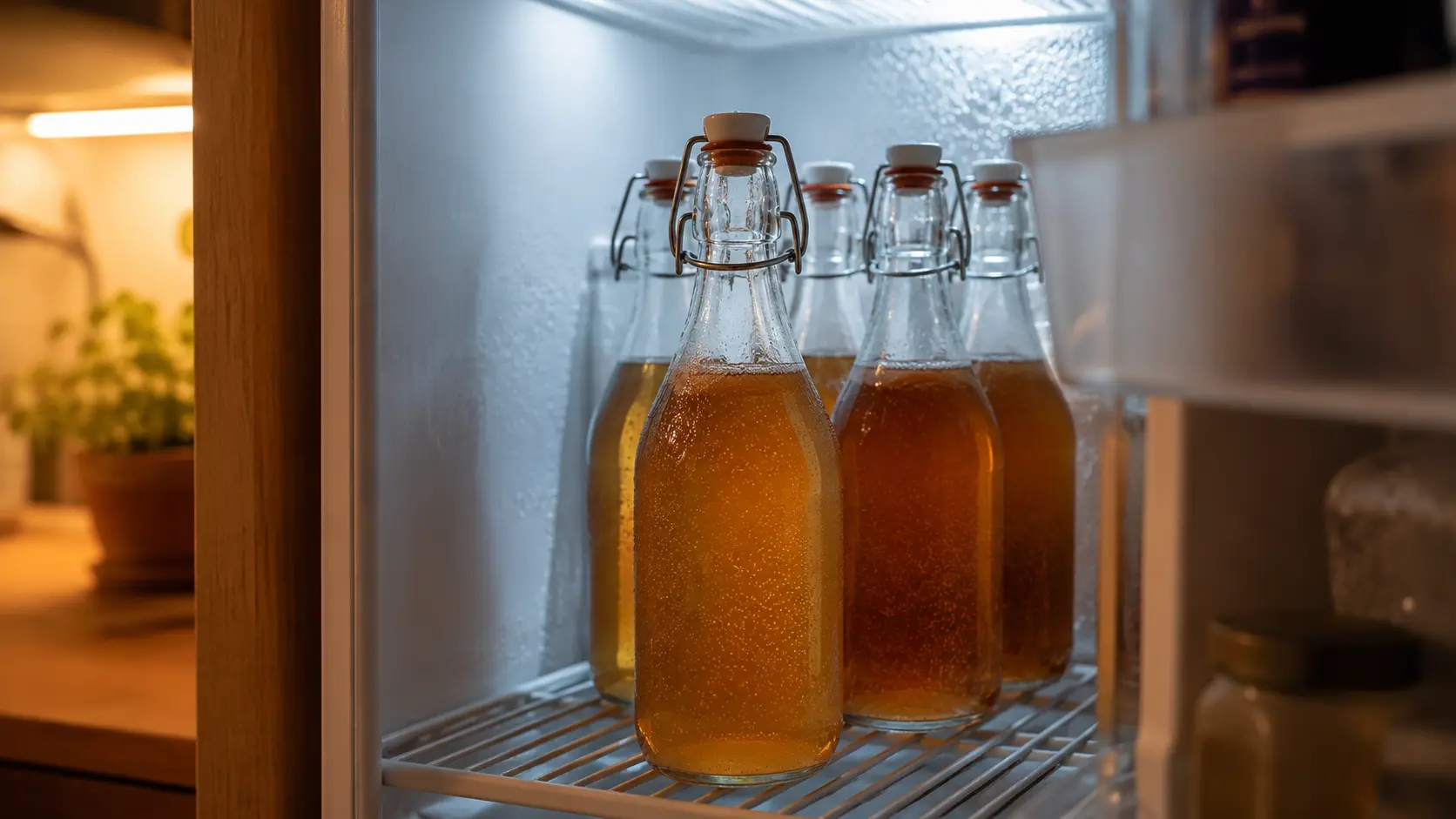
Store kombucha at below 40°F (4°C). Every 5-degree temperature rise cuts shelf life by roughly 1 week. The back of your fridge (not the door) is the best position for consistent cold.
Expiration vs. Quality: What “Best By” Actually Means
“Best by” ≠ “expires by.” The date printed on kombucha bottles is a quality guideline, not a hard safety cutoff. Here’s the difference:
- Safety: Kombucha is fermented and acidic. It resists harmful bacteria naturally. You won’t get food poisoning from old kombucha.
- Quality: Over time, kombucha continues fermenting in the fridge, becoming more acidic and losing carbonation. After the best-by date, it may taste vinegary and flat, but it’s still safe.
Think of it this way: your kombucha doesn’t “expire”—it just gradually transforms into kombucha vinegar.
How Long Does Kombucha Last in the Fridge?
Refrigeration is what buys you time, so nearly every shelf life question comes back to it. Here’s the short version before we get into why.
Unopened store-bought kombucha keeps for roughly 6 to 8 months in the fridge, and it stays drinkable well past the printed date. Opened store-bought kombucha is best within 7 to 14 days. Homemade kombucha holds up for 1 to 3 months after bottling.
The reason those windows vary so much is that cold doesn’t stop fermentation. It just slows it down to a crawl. The longer a bottle sits, the more acidic and less fizzy it gets, whether it’s opened or not.
How Long Does Kombucha Last After Opening?
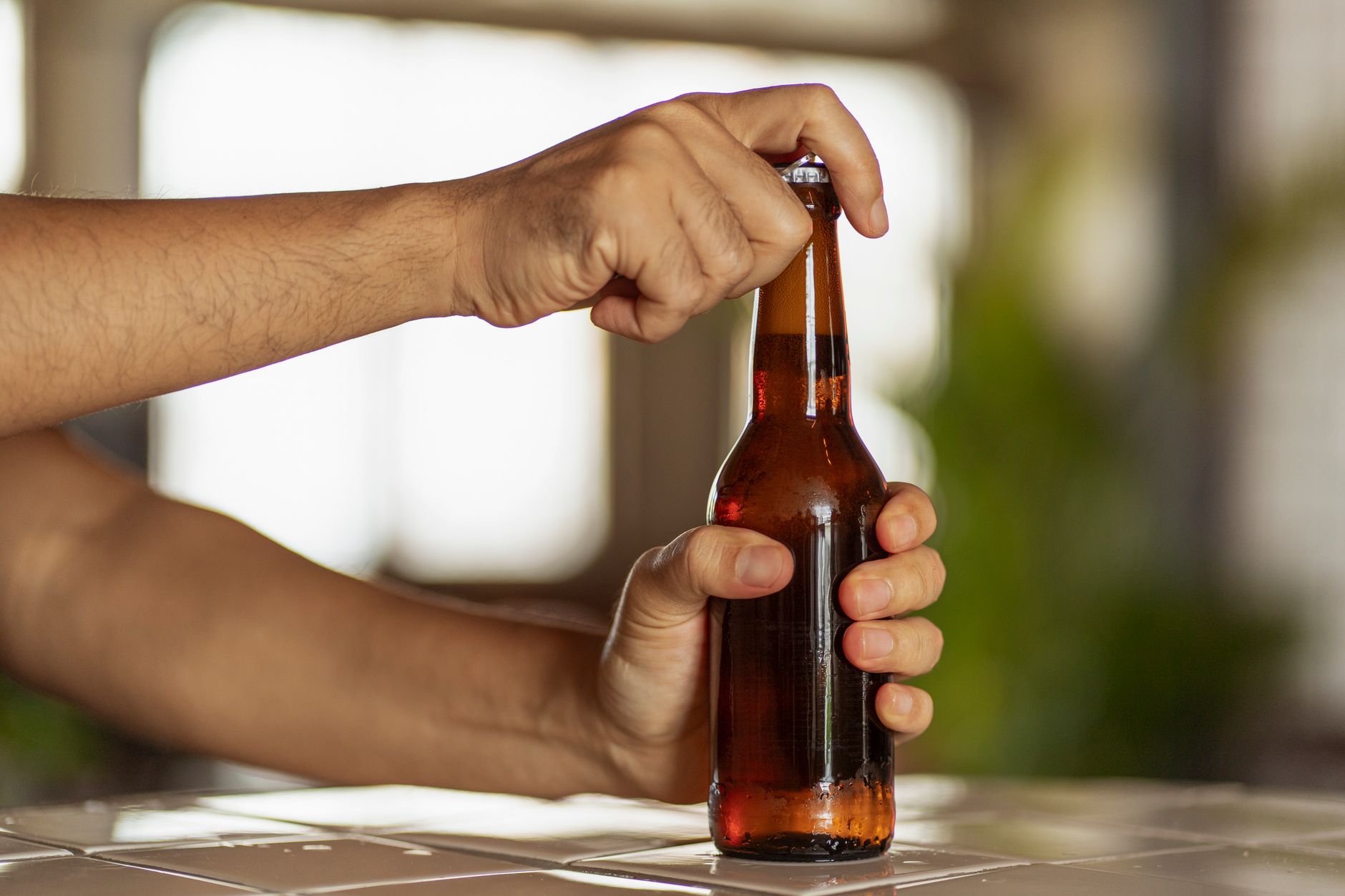
Once you break the seal, the clock speeds up. Opened kombucha is best enjoyed within 7 to 14 days in the refrigerator.
Two things change the moment you open a bottle. Carbonation starts escaping through the broken seal, so the fizz you paid for begins to fade. And the culture gets exposed to fresh oxygen, which nudges the fermentation balance in a more acidic direction.
It won’t become unsafe in that window. It will get noticeably flatter and sharper. If you’re only drinking a glass at a time, smaller bottles are genuinely worth it over one large one.
How Long Does Homemade Kombucha Last in the Fridge?
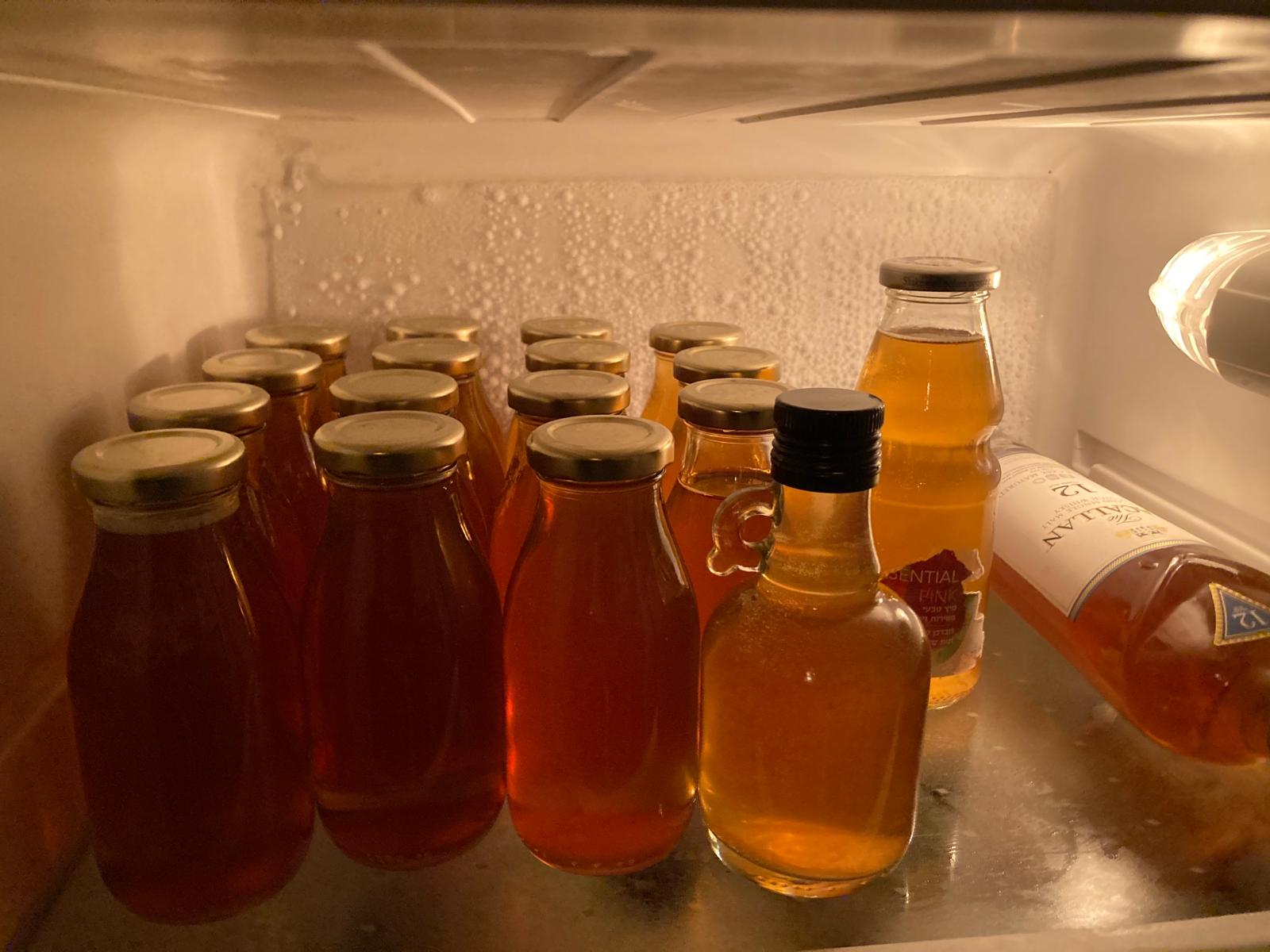
Homemade kombucha lasts around 1 to 3 months in the fridge after bottling, though that range depends heavily on how it was brewed, bottled, and stored.
Store-bought kombucha has a more predictable shelf life because commercial producers control fermentation time, sugar levels, and sealing. Homemade is different for three reasons: it is never pasteurized, it typically carries higher live culture concentrations, and its sugar and organic acid balance varies with every batch based on fermentation time, temperature, and SCOBY health.
Fruit-flavored or juice-infused batches sit on the shorter end of that window, since the added sugars give the yeast more to work with and speed fermentation along.
For best flavor, plan to drink a home brew within the first month or so. After that it stays perfectly safe, it just keeps drifting toward vinegar.
Learn more about the fermentation process and SCOBY health at Healthline’s guide to kombucha SCOBY health.
Why Refrigeration Is Non-Negotiable
Here’s the science behind why your fridge matters so much. During kombucha fermentation, sucrose is hydrolyzed by yeast cells into fructose and glucose, which are then metabolized to ethanol. That ethanol is then oxidized by acetic acid bacteria (AAB) to produce acetic acid, which lowers the pH and contributes to kombucha’s sour taste.
The key takeaway: this process never truly stops. Home brew has live yeast and bacteria, which go into a state of dormancy when chilled. Once refrigerated, kombucha will still continue to ferment, but at a very slow pace, getting more carbonated and more acidic as the yeasts continue eating the sugars in the brew.
Cold temperatures slow everything down dramatically. Without refrigeration, fermentation runs wild.
Check out our full home-brewing guide if you want to understand fermentation from the very start.
Does Kombucha Go Bad If It’s Not Refrigerated?
If unrefrigerated, raw kombucha will continue to ferment in the bottle or can. This can create more carbonation, and in extreme cases, the bottle or can may burst. Continued fermentation will also affect the overall taste and quality.
Raw, unpasteurized kombucha should be consumed promptly if not refrigerated, typically within three days. Beyond that, you’re mostly fighting flavor loss, not a safety crisis.
It’s also essential to store kombucha away from direct sunlight, as UV rays are harmful to the yeast and bacteria culture.
How to Tell If Your Kombucha Has Gone Bad
A bit of tartness, cloudiness, and brown stringy floaties are all completely normal. In fact, the first time a SCOBY grew a long brown stringy strand underneath, it was only yeast doing its thing. Those strands are harmless.
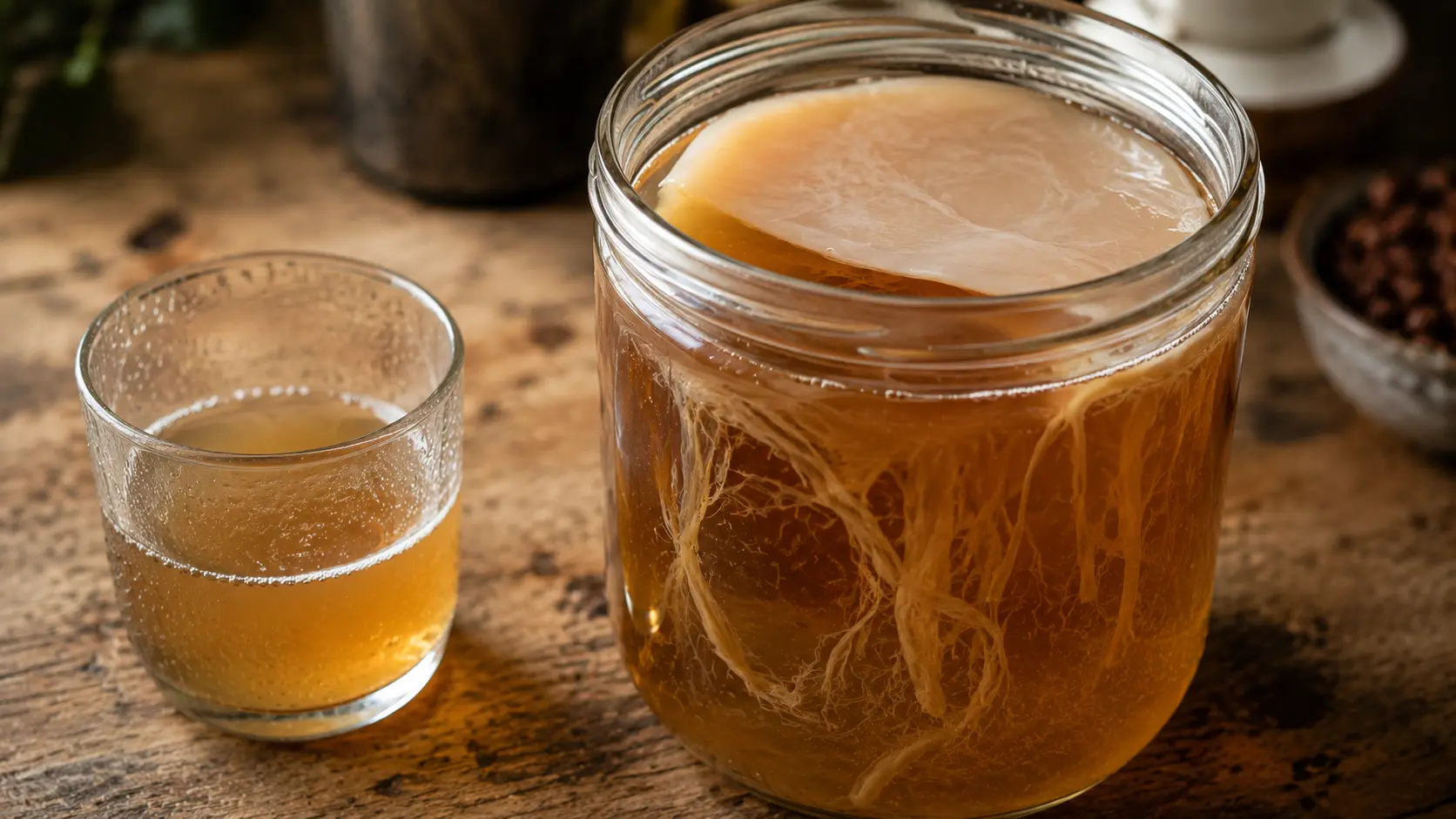
What you actually want to watch for is different. Spoiled kombucha exhibits a vinegary taste, visible mold, excessive cloudiness, and a thick or slimy consistency.
Fuzzy patches and surface discoloration are no good. If the floating sediments are green or pink, that’s also likely a sign of mold growth.
If you notice a potent alcohol smell or excessive foam, that’s also a sign to toss it out. And if something just smells wrong, trust your nose. Your senses are the best quality-control tool you have.
A Note on Pasteurized Kombucha
Some commercial brands pasteurize their kombucha to extend shelf life and allow room-temperature storage. Pasteurized kombucha lasts longer past its best-by date because the fermentation process has been halted. However, pasteurized kombucha also lacks live probiotic cultures, which is the primary health benefit of kombucha in the first place.
So if you’re buying kombucha primarily for the live cultures, check the label carefully. Raw, unpasteurized kombucha is what most people think of when they reach for a bottle at the grocery store.
Read more about the science behind those active compounds in this scientific review of kombucha’s active compounds (PubMed).
Pro Tips for Maximizing Shelf Life
- Keep it cold. Ideally, kombucha should be stored at a temperature below 40°F (4°C) to significantly slow down fermentation and preserve its quality.
- Cap it tightly after opening. After opening, carbonation begins escaping through the broken seal, and the bacterial culture is exposed to new oxygen that can alter the fermentation balance.
- Store at the back of the fridge. After pouring a serving, replace the lid tightly and return the bottle to the coldest part of your fridge, typically the back lower shelf, not the door where temperatures fluctuate with every opening.
- Don’t throw out over-fermented kombucha. If your kombucha tastes ultra-vinegary but has no signs of mold growth, you can use it as a vinegar substitute for cooking rather than tossing it out.
Want to get more out of every batch you brew? Head over to Kommbucha’s home brewing and kombucha guides for everything from SCOBY care to second fermentation timing.
Frequently Asked Questions
Q: Can I drink kombucha past the expiration date?
A: Kombucha is generally safe to drink even after the expiration date, though it may be more tart, and you should always use your best judgment when it comes to any off flavors or smells. The date on the bottle is a quality guideline, not a hard safety cutoff.
Q: How long does opened kombucha last in the fridge?
A: Once you’ve opened it, the clock starts ticking faster. Even when stored in the refrigerator with a resealable cap, opened kombucha is usually best enjoyed within 1 to 2 weeks. After this time, you might notice a significant loss of fizz and a more pronounced tartness.
Q: Does homemade kombucha last as long as store-bought?
A: Generally, no. Homemade kombucha tends to have a shorter shelf life compared to commercially produced ones, and factors like the specific recipe, fermentation time, and storage conditions affect the shelf life. Plan to drink it within 1 to 3 months of bottling for the best flavor.
Q: What happens if kombucha is left out of the fridge overnight?
A: If a bottle spends less than 48 hours at room temperature, it will still be fine to chill and enjoy. Leave it out any longer than that and it may become fizzier and taste different. Kombucha doesn’t “go bad” like spoiled milk, but it will be an inconsistent liquid.
Q: Are the brown stringy floaties in my kombucha a sign it’s gone bad?
A: Floaties or brown stringy things floating in the kombucha are normal. These are strands of yeast, a natural component in kombucha. What you’re actually watching for is fuzzy colored patches on the surface or green and pink sediment, which are real signs of mold.
Q: How long does kombucha last in the fridge?
A: Unopened store-bought kombucha lasts 6 to 8 months in the fridge. Opened bottles are best within 7 to 14 days. Homemade kombucha lasts 1 to 3 months. Refrigeration is critical because it slows—but doesn’t stop—fermentation.
Q: How long does homemade kombucha last in the fridge?
A: Homemade kombucha typically lasts 1 to 3 months in the fridge after bottling. The exact timeframe depends on fermentation time, temperature during storage, and SCOBY health. For best flavor, drink within the first month.
Q: How long does kombucha last after opening?
A: Opened kombucha is best within 7 to 14 days in the refrigerator. Once the seal is broken, carbonation escapes and fermentation accelerates, making the kombucha flatter and more acidic over time.
Q: How long does opened kombucha last in the fridge?
A: Opened kombucha lasts 7 to 14 days in the fridge. Store it in the coldest part of your refrigerator with the cap tightly closed to slow carbonation loss and fermentation.
Q: How long is kombucha good for in the fridge?
A: Unopened kombucha is good for 6 to 8 months. Once opened, consume within 7 to 14 days for best flavor and fizz. Homemade batches last 1 to 3 months depending on fermentation and storage conditions.
Q: How long does kombucha last in the fridge?
A: 6–8 months (unopened), 7–14 days (opened),
1–3 months (homemade)
Home kombucha brewer based in Tel Aviv with 6+ years of experience and 500+ batches brewed. I started Kommbucha.com because the information online was scattered or just plain wrong — I wanted advice from someone who actually brews. My kombucha is sold at local Tel Aviv coffee shops and been gifted many times in Detroit, Michigan .