
✍️ Written & Updated by Ofir The Fermenter · 📅 August 28, 2026
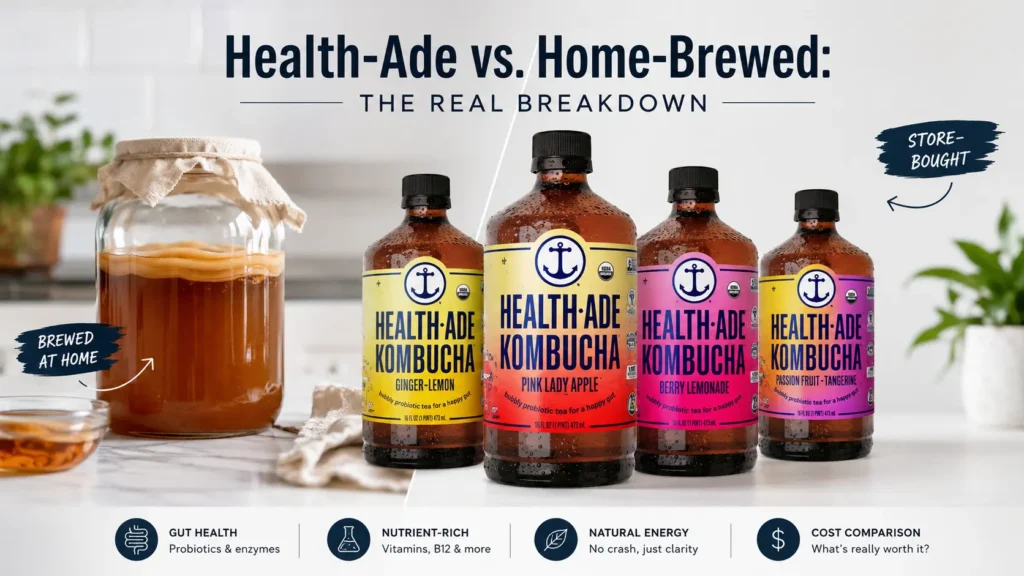
I reach for a bottle of Health-Ade at Whole Foods every time I forget to plan a batch. It is genuinely good kombucha. But it gets me thinking: how does it actually stack up against something brewed at home?
Let me lay out the real trade-offs, ingredient by ingredient and dollar by dollar, so you can decide which path makes sense for you.
Disclosure: I have no affiliation with Health-Ade or any other kombucha brand mentioned here. This is my honest take based on direct experience brewing kombucha and buying their product. I’m comparing store-bought vs. home-brewed because I get asked this question constantly, and the data matters more than loyalty to either approach.
What Is Health-Ade Kombucha, Exactly?
Health-Ade is one of the more transparent brands on the market. They ferment organic green and black teas with a culture of yeast, bacteria, and organic cane sugar.
Every flavor contains organic black and green tea, water, organic cane sugar, live kombucha cultures, and acids from fermentation. Each 16 oz bottle contains 1 billion CFU of live active cultures from Bacillus coagulans at time of bottling.
They add organic fruit juices for balance. No artificial colors or sweeteners, which is respectable.
How Fermentation Actually Works
Understanding fermentation explains why home-brewed and store-bought taste and perform differently.
Yeasts in the SCOBY metabolize sucrose into glucose and fructose, then into ethanol. Acetic acid bacteria convert that ethanol into acetic acid, which drops the pH.
Minor acids like gluconic, glucuronic, and lactic acid also form during fermentation. Tea polyphenols get modified along the way.
The longer and warmer the ferment, the more acid builds up. That is the lever you control at home. According to a peer-reviewed Foods journal review of kombucha production and microbiology, this balance is central to flavor and probiotic profile.
Probiotic Content: Store-Bought vs. Home-Brewed
Diversity is where home-brewed pulls ahead. Homemade kombucha is usually richer in probiotics due to lack of pasteurization and controlled fermentation.
Commercial kombucha may lack consistency and diversity. A home brew allowed to ferment fully offers more variety.
Health-Ade’s 1 billion CFU comes from one added strain. Home brew contains a wide ecosystem of bacteria and yeast whose counts shift batch to batch.
If you are curious how kombucha compares to other options, the page on kombucha vs other probiotics covers that ground well.
Antioxidants: A Clear Win for Home-Brewed
One study found homemade kombucha had roughly twice the total antioxidants of store-bought. That gap is meaningful.
Commercial kombucha is bottled and shipped. Pasteurization or filtration can reduce antioxidant compounds. Your home batch goes from jar to glass in days.
Ingredients Side by Side
- Tea base: Health-Ade uses organic black and green. Home-brewed is your choice.
- Probiotic strains: Health-Ade has 1 added strain. Home-brewed offers multi-strain SCOBY.
- Antioxidants: Health-Ade is lower due to shelf time. Home-brewed reaches up to 2x higher.
- Sugar control: Health-Ade is fixed per label. Home-brewed is fully adjustable.
- Cost per 16 oz: Health-Ade runs $3 to $4. Home-brewed costs under $0.50.
- Sanitation risk: Health-Ade is very low. Home-brewed is low if done right.
The Cost Difference Is Real
Health-Ade single bottles run around $3 to $4 for a 16 oz bottle at most retailers. Specialty stores charge closer to $4 to $5.
Store-bought adds up fast if you drink it daily. Home-brewed is budget-friendly once you have initial ingredients.
A gallon (128 oz / 3.8 liters) of home-brewed costs well under $2 in tea and sugar. That is roughly eight bottles for less than one Health-Ade.
Flavor Control: The Home-Brewing Edge
This is where home-brewing shines. I can pull the first ferment early for sweetness, or let it run for more tartness.
I advised a coffee shop whose house kombucha came out too sour. Pulling the first ferment two days shorter fixed it. That adjustment only works when you control the process.
Home-brewing offers freshness, diverse probiotics, and flavor customization. You dial in sweetness to your exact taste.
Safety: What You Should Know
Health-Ade has an advantage here. Their process is controlled, tested, and consistent.
Homemade kombucha can be contaminated if not brewed carefully. Follow proper sanitation to avoid contamination.
Use glass jars. Clean everything with hot water and white vinegar. Keep your SCOBY in plenty of starter liquid.
Anyone at high risk for foodborne illness should avoid raw fermented foods. That includes immunocompromised or pregnant people. If you take blood pressure medication, read up before adding daily kombucha to your routine.
Who Should Choose Health-Ade?
- Convenience first: you want ready-to-drink with no setup.
- Gifting or travel: a labeled bottle is easy to share.
- Trying before committing: a great way to confirm you like kombucha.
- Safety concerns: a tested product if immunocompromised.
Who Should Brew Their Own?
- Cost savings: daily Health-Ade spending adds up fast.
- Flavor control: dial in tartness, sweetness, and carbonation.
- Higher antioxidants: fresh home-brewed retains more tea compounds.
- Probiotic diversity: a healthy SCOBY delivers wider microbial community.
If you wonder if kombucha is healthy, the evidence points to genuine gut health support. Claims around serious conditions lack strong human trials.
My Honest Take
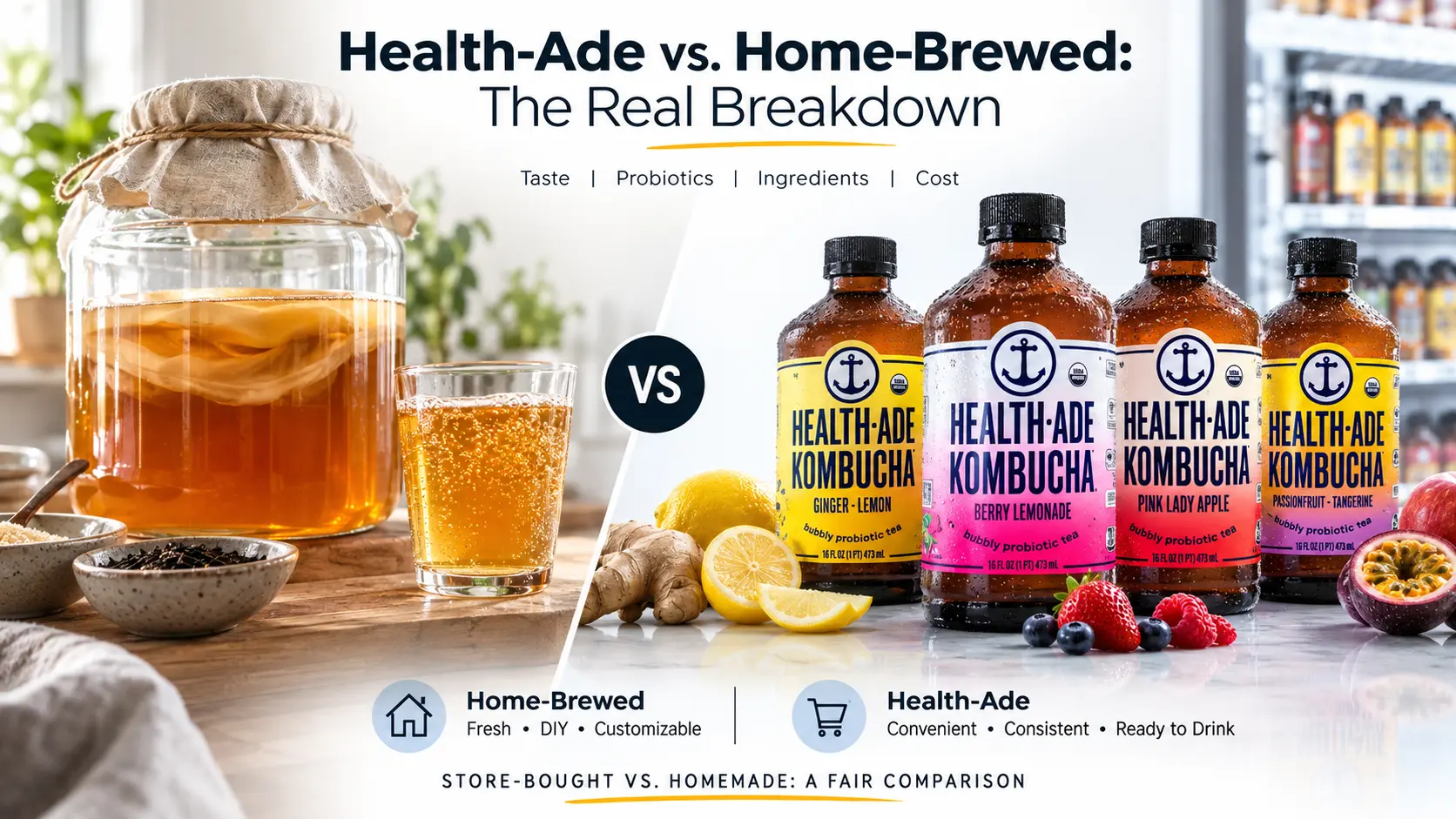
Health-Ade is among the best commercial options. Organic ingredients, clean label, and live cultures are real. I grab it without hesitation when traveling.
For everyday drinking, home-brewing wins on cost, freshness, antioxidants, and diversity. The upfront learning curve is real but flattens quickly.
Think of Health-Ade as your backup and home-brew as your main batch.
Q: Is Health-Ade kombucha actually raw and unpasteurized?
A: Yes, Health-Ade is not pasteurized and contains live active cultures plus added Bacillus coagulans for consistent probiotic dose. Keep bottles refrigerated, since warmth degrades live cultures over time.
Q: How much does it cost to brew kombucha at home vs. buying Health-Ade?
A: Health-Ade runs $3 to $4 per 16 oz bottle at retail. Home-brewing a full gallon (128 oz / 3.8 liters) costs under $2 in tea and sugar once you have your SCOBY. Daily drinking makes savings substantial.
Q: Does home-brewed kombucha have more probiotics than Health-Ade?
A: Home-brewed generally has more strain diversity, offering a wide ecosystem from the SCOBY. Health-Ade provides one well-studied strain at precise count. Which is better depends on whether you value consistency or diversity.
Q: Is it safe to brew kombucha at home instead of buying it?
A: Home-brewing is safe for healthy adults when you follow proper sanitation with glass vessels and sufficient starter liquid. Immunocompromised, pregnant, or health-concerned people should consult a doctor before consuming either home-brewed or store-bought kombucha.
Q: What makes Health-Ade different from other store-bought kombucha brands?
A: Health-Ade uses organic black and green tea, ferments in glass, and adds no artificial sweeteners or flavors. It discloses probiotic strain and CFU count, which many brands do not. That transparency makes fair comparison easier.
Ofir is a brewer, not a doctor, so anyone with a medical concern should talk to a healthcare professional.
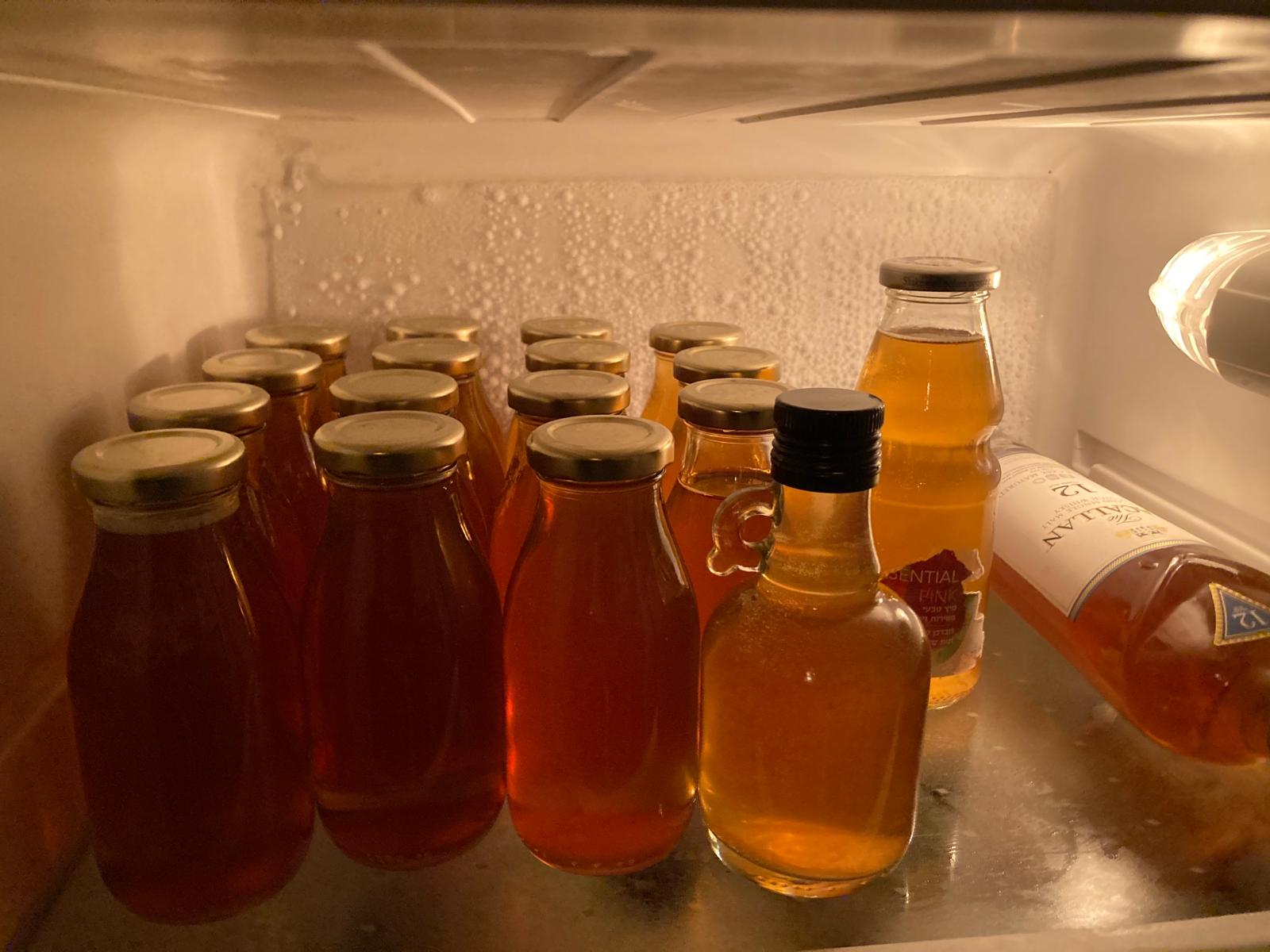
Home kombucha brewer based in Tel Aviv with 6+ years of experience and 500+ batches brewed. I started Kommbucha.com because the information online was scattered or just plain wrong — I wanted advice from someone who actually brews. My kombucha is sold at local Tel Aviv coffee shops and been gifted many times in Detroit, Michigan .