
✍️ Written & Updated by Ofir The Fermenter · 📅 July 9, 2026
Your antibiotic course is finished. Your gut feels wrecked. You know fermented foods are good for you, and you’re ready to repair the damage. The question is: how do you actually rebuild your microbiome after antibiotics? The answer is timing, consistency, and diversity — and kombucha plays a solid role in that equation.
Why Antibiotics Destroy Your Gut (And How Long Recovery Takes)
Antibiotics don’t discriminate. They kill the bacteria causing your infection, but they also eliminate large portions of your beneficial gut flora in the process. That damage doesn’t resolve the moment you finish your course.
Your microbiome is a slow-growing ecosystem. Research shows that a single antibiotic course can disrupt your microbiome for weeks or even months — for most people, the microbiome returns close to baseline within 2 to 8 weeks, though full recovery of microbial diversity can take 3 to 6 months.
The good news: that recovery window is exactly when kombucha and other fermented foods become most valuable. The bad news: you can’t just drink kombucha and assume your gut will fix itself. You need a strategy.
The Peak Rebuilding Phase: Days 1–14 Post-Antibiotic
The first two weeks after finishing your antibiotic are critical. This is when your gut is most receptive to beneficial bacteria colonizing the empty space left behind. This is the time to be consistent with kombucha, not sporadic.
Starting kombucha right away (after any alcohol-clearance window if you were on metronidazole or tinidazole) signals your gut to accept these beneficial microbes. Skipping a few days or waiting a week loses momentum in this critical window.
Begin with a modest serving — 4 to 6 oz (120 to 180 ml) per day — and increase gradually over the first few days. Your gut is already irritated and adjusting, so ease in rather than shock it with a full 16 oz bottle.
How Kombucha Actually Supports Microbiome Recovery
Kombucha isn’t a magic cure, but it does something genuinely useful during this window. The fermentation process produces organic acids (acetic and lactic acid) that create an environment where beneficial bacteria thrive.
Beyond the acids, kombucha contains live microorganisms — primarily acetic acid bacteria and beneficial yeast strains. Research shows that certain kombucha strains can survive gastric transit and reach the large intestine intact, where they can contribute to microbiota diversity.
The honest caveat: kombucha is a useful complement, not a replacement for a clinical probiotic supplement or a diverse diet. Its live culture counts are variable and often lower than dedicated probiotic products. Think of it as one tool in a broader recovery strategy.
The 2–6 Week Recovery Window: What the Science Says
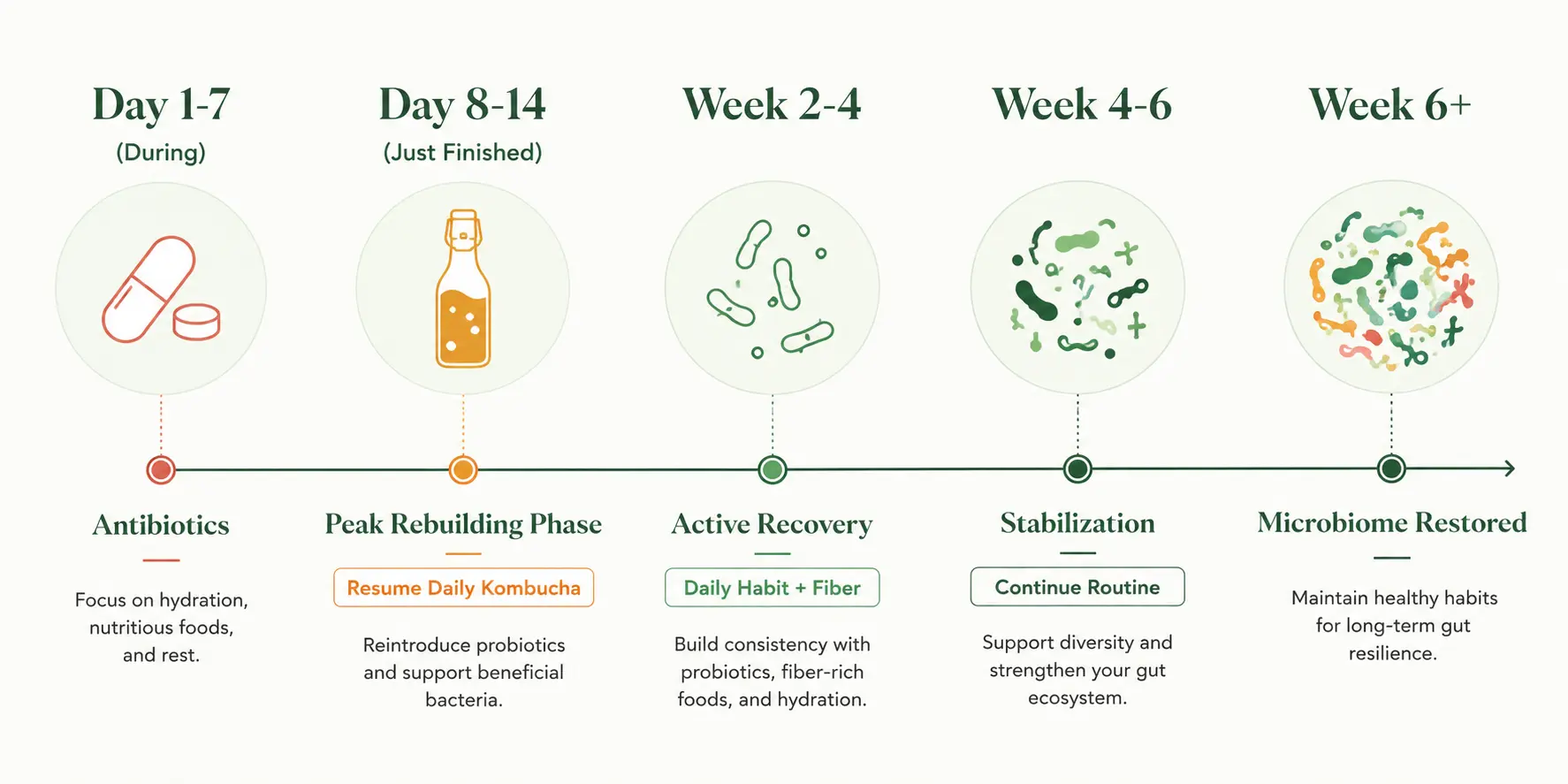
Most experts recommend continuing probiotic-rich foods for 2 to 4 weeks after your last antibiotic dose. After a heavy or longer course, extending that timeline to 6 weeks (or even several months) is reasonable, since some beneficial bacterial species take that long to fully repopulate.
A 2023 NIH study on kombucha’s pharmacological properties found that fermented beverages with diverse microbial strains can support gut barrier integrity and help prevent dysbiosis. However, one important caveat: some researchers note that relying on a single probiotic source can actually slow the return of your naturally diverse microbiome.
This is why diversity matters more than any single drink. Kombucha + yogurt + sauerkraut + fiber-rich vegetables = faster recovery than kombucha alone.
The Right Kombucha for Post-Antibiotic Recovery
Not every bottle on the shelf is created equal. While around 82% of retail kombucha products contain live cultures, label claims like “probiotic” aren’t always backed by meaningful counts.
Look for: bottles kept refrigerated throughout the supply chain, or those listing specific bacterial strains (like Acetobacter or Lactobacillus). Home-brewed kombucha often carries more live diversity — a well-made home brew, fermented 7–10 days and kept cool, likely has more active cultures than a shelf-stable bottle.
One practical note: kombucha contains caffeine from the base tea (roughly 8–15 mg per 8 oz). Antibiotic-associated diarrhea is already common, and excessive caffeine can worsen it. Start at the lower end of the serving size (4–6 oz) and increase gradually as your digestion stabilizes.
Building Your Post-Antibiotic Recovery Diet
Kombucha alone won’t rebuild your microbiome. You need fermented food diversity and fiber.
During weeks 2–6, pair kombucha with: plain yogurt (unsweetened), kefir, sauerkraut, kimchi, miso, and tempeh. These fermented foods contain different beneficial bacterial strains, which means your gut gets diverse microbial input — exactly what rebuilding requires.
Add fiber from whole foods: oats, leafy greens, sweet potatoes, beans, legumes, onions, garlic, asparagus. Fiber feeds the beneficial bacteria you’re introducing, helping them colonize and establish. For more on supporting fermentation processes and gut health, our brewing guide explains the mechanics of how microbes actually thrive.
The combination — fermented foods + fiber + time — is what accelerates recovery. For a deeper look at kombucha’s overall health value, that guide covers what the science shows about gut support beyond just antibiotics.
Post-Antibiotic Recovery Timeline at a Glance
When to Consider a Dedicated Probiotic Supplement
Kombucha is valuable, but it’s not a clinical replacement for a targeted probiotic supplement. If your doctor recommends a specific strain-based probiotic after antibiotics, take both — they work synergistically.
A practical approach: kombucha for daily, consistent fermented support + a clinical probiotic supplement if recommended + diverse whole foods + fiber. The combination is more powerful than any single intervention.
For guidance on daily kombucha servings and what “consistent” actually means, that guide covers quantity in detail.
What About Antibiotic-Associated Diarrhea?
Diarrhea is a common post-antibiotic side effect caused by dysbiosis — the imbalance created when antibiotics wipe out beneficial bacteria. Kombucha can help, but timing and amount matter.
Start small (4–6 oz daily) because the caffeine in kombucha can worsen diarrhea if consumed in excess. Increase gradually as your bowel function stabilizes. Pair kombucha with soluble fiber (oats, cooked vegetables) rather than insoluble fiber at first, as this is gentler while your gut rebalances.
Putting It Together: Your Post-Antibiotic Recovery Plan
Days 1–3: Resume kombucha gently (4 oz daily). Avoid stressful foods. Stay hydrated.
Weeks 1–2: Build kombucha to 6–8 oz daily. Add yogurt or sauerkraut. Eat fiber-rich vegetables. This is your peak window.
Weeks 2–6: Maintain daily kombucha + diverse fermented foods + plant-rich diet. Consider a probiotic supplement if recommended by your doctor.
Week 6+: Most people see near-baseline microbiome recovery. You can continue kombucha long-term if you enjoy it — it’s a solid addition to any gut-supporting routine.
Kombucha is one piece of the puzzle. If you’re interested in brewing your own for post-recovery support, that guide covers fermentation and culture quality management. Consistency matters far more than perfection.
Frequently Asked Questions
Q: How soon after finishing antibiotics can I drink kombucha?
A: Immediately, unless you were on metronidazole (Flagyl) or tinidazole — in which case, wait 48–72 hours for the drug to clear your system. For all other antibiotics, resume right away and start with a small serving (4 oz).
Q: How long should I keep drinking kombucha after antibiotics?
A: At least 2 to 4 weeks consistently. After a heavy or longer antibiotic course, extending to 6 weeks or several months is reasonable, since full microbiota diversity can take 3–6 months to restore.
Q: Is kombucha enough to rebuild my gut after antibiotics?
A: No. Kombucha is helpful, but it’s one tool. You need diversity (yogurt, sauerkraut, other fermented foods) + fiber-rich vegetables + time. The combination is far more powerful than kombucha alone.
Q: Should I take a probiotic supplement instead of drinking kombucha?
A: Not instead — alongside. If your doctor recommends a specific probiotic supplement, take it. Kombucha provides broader microbial diversity in a drinkable form, while supplements target specific strains. Both work well together.
Q: Why is the first 2 weeks after antibiotics so important?
A: This is your “peak rebuilding phase.” Your gut has empty space where beneficial bacteria were killed, and it’s most receptive to new colonization. Consistency during weeks 1–2 sets up faster overall recovery.
Q: Can kombucha make antibiotic-associated diarrhea worse?
A: If you drink too much too fast, yes — the caffeine can worsen loose stools. Start with 4–6 oz per day and increase gradually. Pair it with soluble fiber (oats, cooked vegetables) for gentler support.
Q: How do I choose the best kombucha for post-antibiotic recovery?
A: Look for bottles kept refrigerated (indicates live cultures) or those listing specific bacterial strains. Home-brewed kombucha often has more diverse cultures. Start with whatever you tolerate best, then experiment with different brands or types as your digestion stabilizes.
Ofir is a brewer, not a doctor — consult a healthcare professional for medical concerns specific to your antibiotics or recovery.
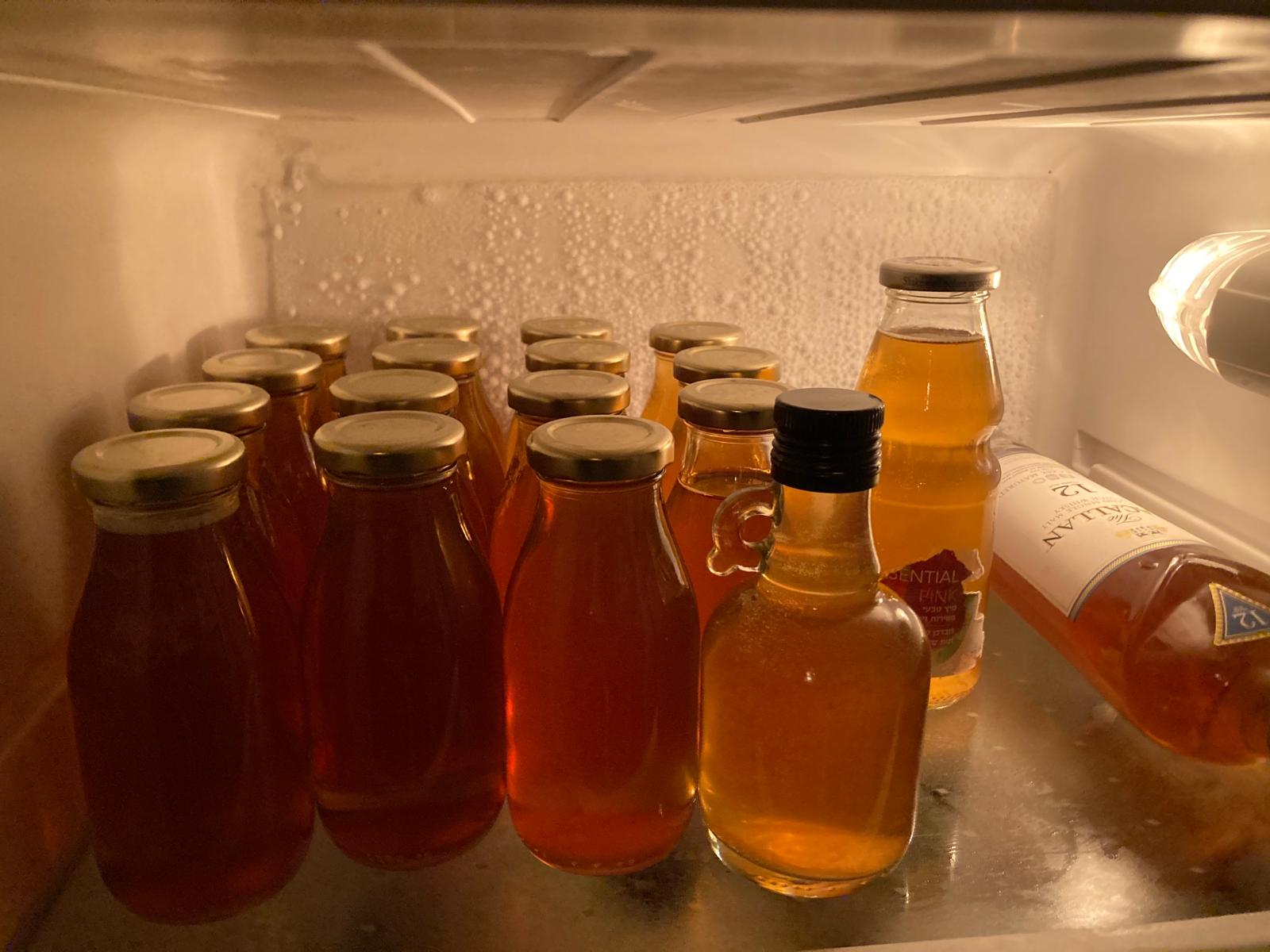
Home kombucha brewer based in Tel Aviv with 6+ years of experience and 500+ batches brewed. I started Kommbucha.com because the information online was scattered or just plain wrong — I wanted advice from someone who actually brews. My kombucha is sold at local Tel Aviv coffee shops and been gifted many times in Detroit, Michigan .