
✍️ Written & Updated by Ofir The Fermenter · 📅 May 21, 2026
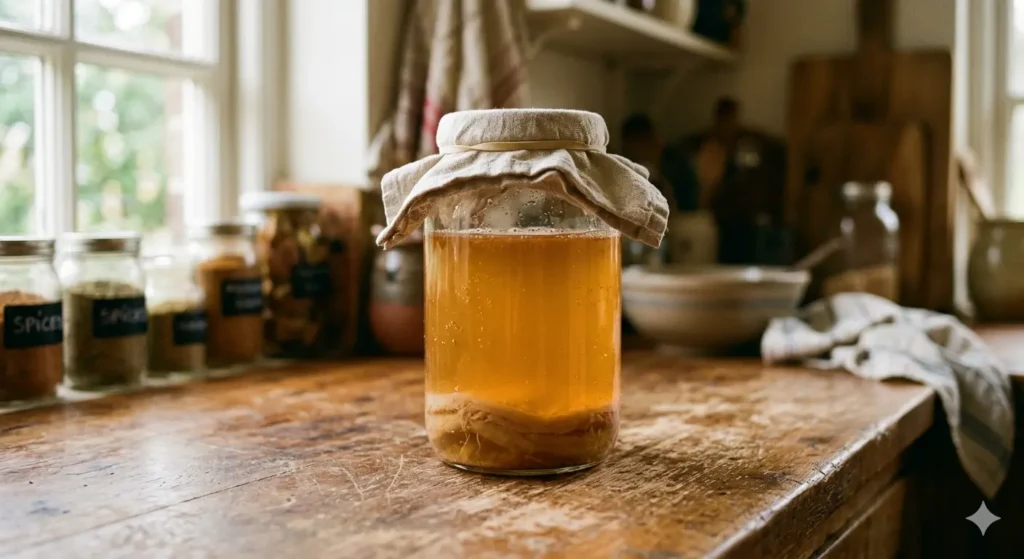
You brewed your first batch of kombucha, checked it after a few days, and noticed your SCOBY isn’t floating gracefully on top like you expected. Instead, it’s sitting at the bottom of the jar like a deflated pancake. Cue the panic, right?
Here’s the thing: I’ve been brewing kombucha for over six years now, and I can’t tell you how many times I’ve watched a SCOBY sink to the bottom—including in batch #47, which turned out to be one of my best brews. Your SCOBY’s position in the jar doesn’t determine the success of your fermentation nearly as much as you think it does.
Why Your SCOBY Sank to the Bottom (And Why It’s Fine)
When your SCOBY sank to the bottom, it’s usually because of density changes in the cellulose structure. A SCOBY (Symbiotic Culture of Bacteria and Yeast) is basically a cellulose mat created by the bacteria, and depending on how much liquid it’s absorbed, how thick it is, or how much gas is trapped inside, it can sink, float, or hang out sideways.
The mechanics are pretty straightforward: denser SCOBYs sink, lighter ones float. During fermentation, the bacteria Komagataeibacter xylinus produces acetic acid and builds new cellulose layers. If your SCOBY absorbed a lot of liquid before you added it to the new batch, or if it’s an older, thicker culture, it’s heavier and more likely to settle at the bottom.
What’s actually fermenting your sweet tea isn’t just the visible SCOBY—it’s the starter liquid (the kombucha from your last batch) that contains millions of active yeast cells and bacteria. According to peer-reviewed research on kombucha fermentation (NIH), the liquid culture carries most of the active microorganisms responsible for converting sugars into acids and carbonation.
In batch #47 that I mentioned, I used a thick, month-old SCOBY that immediately sank to the bottom. I was convinced I’d screwed something up. But after seven days, a beautiful new SCOBY formed on the surface, and the brew tasted perfect—bright, tangy, with just enough sweetness remaining.
What Actually Matters During Fermentation
The position of your original SCOBY matters way less than these factors:
- Temperature: Keep your brew between 68-78°F for optimal fermentation
- Starter liquid ratio: Use at least 10% mature kombucha from a previous batch
- Oxygen access: Cover with a breathable cloth, never an airtight lid
- Time: Allow 7-14 days depending on temperature and taste preference
On a related note — if you’re taking antibiotics while brewing, it’s worth understanding how that might affect both your kombucha and your gut. We cover this in detail in our guide on kombucha and antibiotics.
The yeast in your starter liquid will begin eating the sugar immediately, producing CO2 and alcohol. Then Acetobacter bacteria convert that alcohol into acetic acid, which gives kombucha its signature tang. Meanwhile, a scientific review of kombucha’s active compounds (PubMed) shows that Lactobacillus species contribute lactic acid, adding complexity to the flavor profile.
While this is happening at the microscopic level, you’ll see a new SCOBY forming on the surface of your tea—even if your original one is chilling at the bottom. This new pellicle forms because the Komagataeibacter bacteria need oxygen, which is most abundant at the liquid’s surface. That’s where they congregate and build a new cellulose layer.
When a Sunken SCOBY Might Signal a Problem
While a SCOBY at the bottom is usually harmless, there are a few scenarios where position combined with other symptoms might indicate trouble:
No new SCOBY forms after 7-10 days: If nothing’s forming on top and your tea still tastes sweet with no tanginess developing, your culture might be inactive. This usually happens when the starter liquid was too old, contaminated, or stored improperly.
Mold appears: This is the big one. If you see fuzzy growth (usually white, green, or black) on the surface or on your sunken SCOBY, that’s mold. It looks distinctly different from the smooth, beige-to-cream colored SCOBY layers. When in doubt, check Healthline’s guide to kombucha SCOBY for visual references. If you’ve got mold, toss everything and start fresh—you can’t save a moldy batch.
Foul smell: Kombucha should smell vinegary and slightly yeasty. If it smells rotten, like cheese, or otherwise off-putting, something went wrong. Temperature too high, contamination, or not enough starter liquid can cause this.
I learned this the hard way in batch #12 when I tried to rush fermentation by keeping my jar near a space heater. Temperature spiked to probably 85°F, and within five days, the smell was all wrong—sharp and almost chemical. The SCOBY had sunk, and I mistakenly blamed that instead of the real culprit: heat stress that favored the wrong bacteria.
The New SCOBY Formation Process
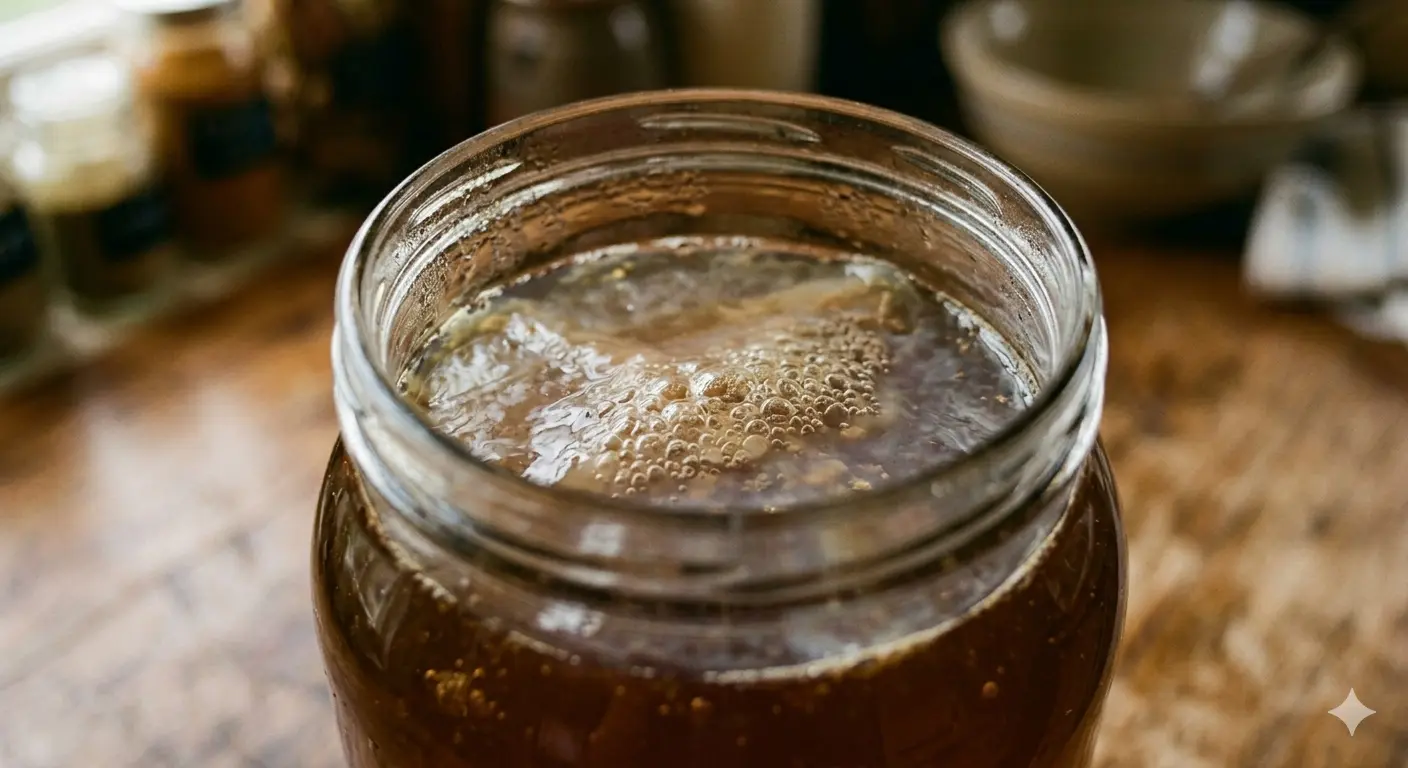
Even with your original SCOBY sank at the bottom, you should see changes within 3-4 days. First, the surface of your tea will develop a thin, translucent film—almost like a skin on warm milk. This is the beginning of your new SCOBY.
Over the next few days, this film thickens and becomes opaque, turning cream-colored or light brown depending on the tea you used. It might start patchy, with little islands that eventually connect into one continuous layer. Brown stringy bits (yeast strands) might hang down from it, and little bubbles might get trapped underneath. All of this is completely normal.
By day 7-10, you’ll have a distinct new SCOBY layer floating on top, anywhere from 1/8 to 1/4 inch thick. Your original sunken SCOBY is still contributing to fermentation down below—it’s not dead weight. The microorganisms living in and on that cellulose mat are still active, still processing sugars, still producing acids.
For more detailed guidance on the entire brewing process from start to finish, check out our comprehensive guide on how to brew kombucha, which covers every stage of fermentation including SCOBY behavior.
Should You Remove a Sunken SCOBY?
Short answer: you don’t have to, but you can. When I brew, I often leave the old SCOBY in for the entire fermentation. It doesn’t hurt anything sitting there at the bottom, and some brewers believe it contributes to flavor complexity with its aged microorganism population.
However, if you’re tight on space or your SCOBY hotel (where you store extra SCOBYs) is getting crowded, you can definitely fish out the sunken one after a few days once the new surface SCOBY has started forming. I use clean hands or wooden tongs—never metal, which can potentially harm the culture.
Here’s my approach: if the sunken SCOBY is from a really successful batch that had great flavor, I’ll leave it in for the full fermentation. If it’s older or I’m experimenting with a new tea blend, I’ll remove it around day 3-4 to make observation easier.
Temperature, Density, and SCOBY Behavior
I’ve noticed that SCOBY position changes with temperature fluctuations. In winter, when my kitchen runs cooler (around 65-68°F), SCOBYs tend to sink more often. I suspect this is because the cellulose structure becomes slightly denser in cooler liquid, and fermentation activity—which produces CO2 bubbles that can make SCOBYs buoyant—slows down.
In summer, with ambient temperatures around 75-78°F, my SCOBYs float more reliably. Warmer temperatures speed up yeast activity, producing more carbonation and creating tiny bubbles that get trapped in the SCOBY’s layers, making it more buoyant.
The sugar content of your sweet tea also plays a role. Higher sugar concentrations create a denser liquid, which can make it easier for SCOBYs to float. As fermentation progresses and sugar converts to acid, the liquid density changes, sometimes causing SCOBYs to shift position mid-fermentation.
What to Do When Your SCOBY Sank Bottom
Honestly? Nothing. Just let it brew. Here’s what I do when I see a sunken SCOBY:
- Check that I used adequate starter liquid (at least 1-2 cups per gallon of sweet tea)
- Confirm the tea has cooled to room temperature before adding the SCOBY
- Cover with a breathable cloth secured with a rubber band
- Place in a warm spot away from direct sunlight
- Leave it alone for at least 5-7 days without disturbing it
- After a week, start tasting daily to check fermentation progress
Taste is your best indicator of readiness, not SCOBY position. When your brew has reached the right balance of sweet and tart for your preference—usually between day 7 and 14—it’s ready to bottle, regardless of where your SCOBY ended up.
The pH should drop to around 2.5-3.5, creating an acidic environment that prevents harmful bacteria from taking hold. That acetic acid the Acetobacter produces isn’t just for flavor—it’s your fermentation safety net.
Common Myths About SCOBY Position
Myth: A floating SCOBY means better fermentation. Not true. Position doesn’t correlate with fermentation quality. I’ve had sinkers produce more carbonated, better-tasting brews than floaters.
Myth: You need the original SCOBY for fermentation to work. Actually, you could brew kombucha with just starter liquid and no visible SCOBY at all. A new one would form on its own. The culture lives in the liquid.
Myth: A SCOBY that sinks is dead. Nope. Unless it’s moldy or your brew isn’t fermenting at all (still sweet after 14 days with no pH change), your SCOBY is fine, just heavy.
Myth: You must remove sunken SCOBYs immediately. There’s no urgent need. Some of my best batches involved leaving everything in the jar—sunken SCOBYs, yeast strands, all of it—until bottling time.
Q: Why did my SCOBY sink after floating for days?
A: This happens when the SCOBY absorbs more liquid and becomes heavier, or when trapped CO2 bubbles that were keeping it buoyant escape. It’s completely normal and doesn’t affect fermentation. The active fermentation continues in the liquid, and your new surface SCOBY keeps developing. Temperature drops can also cause this shift as yeast activity slows slightly.
Q: Can I still use a SCOBY that sank to the bottom?
A: Absolutely. A sunken SCOBY is still alive and active. You can leave it in your current batch to continue fermenting, or fish it out after a few days and add it to your SCOBY hotel. As long as there’s no mold and your fermentation is progressing (tea getting more tart, new SCOBY forming on top), everything is working fine.
Q: How long does it take for a new SCOBY to form if the old one sank?
A: In typical brewing conditions (70-75°F), you’ll see a thin film starting to form on the surface within 3-5 days. By day 7-10, you’ll have a distinct new SCOBY layer, even if your original one is sitting at the bottom. Cooler temperatures slow this process down, while warmer temps speed it up. The new SCOBY formation is your best visual indicator that fermentation is active.
Q: Does a sunken SCOBY mean I didn’t use enough starter liquid?
A: No, SCOBY position isn’t related to starter liquid quantity. However, insufficient starter liquid (less than 10% of your batch volume) can cause slow fermentation or increase mold risk because the pH won’t drop quickly enough. You’ll know you didn’t use enough starter if fermentation seems stalled—tea stays sweet after 10+ days, no tangy flavor developing, and weak or no new SCOBY formation.
Q: Will my kombucha still carbonate if the SCOBY sank?
A: Yes. Carbonation during first fermentation happens in the liquid from yeast activity, not from the physical SCOBY. During second fermentation (after bottling with added fruit or sugar), you’ll get even more carbonation as the remaining yeast consumes the new sugars in an anaerobic environment. SCOBY position has zero effect on your brew’s fizziness potential.
Home kombucha brewer based in Tel Aviv with 6+ years of experience and 500+ batches brewed. I started Kommbucha.com because the information online was scattered or just plain wrong — I wanted advice from someone who actually brews. My kombucha is sold at local Tel Aviv coffee shops and been gifted many times in Detroit, Michigan .