

✍️ Written & Updated by Ofir The Fermenter · 📅 September 13, 2026
Quick Answer: A SCOBY hotel is a glass jar where you store backup SCOBYs in kombucha liquid, creating a living reserve for future brews. It’s essentially a SCOBY storage system that keeps your cultures healthy and ready—I keep mine in a half-gallon jar with about 8 SCOBYs floating in kombucha, and it’s saved my brewing operation more times than I can count.
Start Your SCOBY Hotel in 5 Steps
- Get a half-gallon glass jar with wide mouth
- Add 2-3 cups of finished kombucha (unflavored)
- Place 2-3 SCOBYs into the liquid
- Cover with cloth secured by rubber band
- Store at 68-78°F, away from sunlight
That’s it. Your hotel is ready.
If you’re serious about brewing kombucha regularly, a SCOBY hotel isn’t just useful—it’s essential. Every batch you brew produces a new SCOBY layer, and rather than tossing these “babies” or desperately giving them to neighbors, you can store them properly and use them when needed.
What Exactly Is a SCOBY Hotel and Why You Need One
A SCOBY hotel is exactly what it sounds like: temporary (or long-term) housing for your extra SCOBYs. It’s a jar filled with kombucha liquid where multiple SCOBY cultures live together, staying active and healthy without producing a full batch of kombucha for drinking.
Here’s what happens inside that jar: the beneficial bacteria and yeast continue their symbiotic relationship, consuming sugars from the liquid and producing small amounts of acetic acid. This keeps the pH low (around 2.5-3.5) and creates an environment hostile to mold and harmful bacteria. According to peer-reviewed research on kombucha fermentation (NIH), this acidic environment is precisely what preserves the culture’s viability over extended periods.
I started my first SCOBY hotel in 2019 after my fourth batch produced an unusually thick, beautiful culture that I couldn’t bear to compost. Five years later, I’ve used SCOBYs from that original hotel to restart batches, share with friends, and even recover from contamination issues.
Choosing Your SCOBY Hotel Container
The container matters more than you might think. I learned this the hard way when I tried using a repurposed pickle jar—the lingering dill smell affected my kombucha’s flavor for three batches afterward.
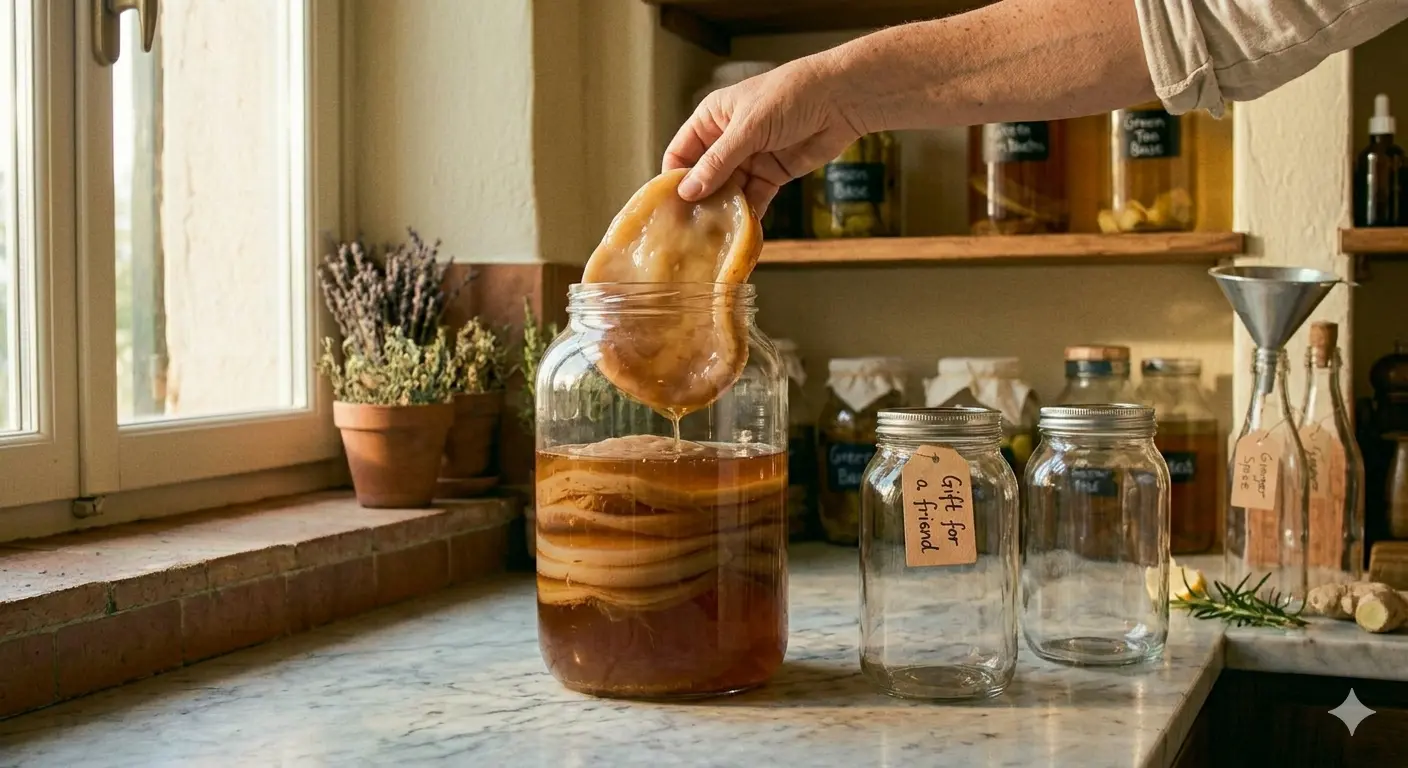
Use a wide-mouth glass jar, ideally between half-gallon and one-gallon capacity. Glass is non-reactive, unlike metal which can interact with the acidic kombucha and harm your cultures. The wide mouth makes it easy to add and remove SCOBYs without tearing them (though honestly, a torn SCOBY works just fine—it’s not as fragile as people think).
I use a half-gallon Anchor Hocking jar with a cloth cover secured by a rubber band, the same setup I use for brewing. Never use an airtight lid—your cultures need to breathe. The aerobic bacteria in your SCOBY require oxygen to thrive, which is why Healthline’s guide to kombucha SCOBY emphasizes proper air circulation during storage.
Setting Up Your SCOBY Hotel Step-by-Step
Starting a SCOBY hotel is remarkably simple. Here’s exactly how I set up my current one:
Gather your supplies: You need your glass jar, extra SCOBYs (at least 2-3 to start), and strong starter liquid. That starter liquid is crucial—it should be unflavored kombucha from a previous batch, ideally at least 2 cups per SCOBY you’re storing.
Pour the liquid first: Add your starter kombucha to the jar before adding SCOBYs. I use about 2-3 cups of liquid for a half-gallon jar as the base layer. This liquid should be mature kombucha—tangy, with a pH around 3.0. If you’re just starting and only have one SCOBY, brew a regular batch, then use that finished kombucha as your hotel base.
Add your SCOBYs: Gently place your extra SCOBYs into the liquid. They’ll float, sink, or hover at weird angles—all normal. Mine currently has six SCOBYs in various states: two thick ones from winter batches, three medium ones, and one thin layer that formed last week. They stack, overlap, and generally do their own thing.
Cover properly: Use a tight-weave cloth (coffee filters work great) or paper towel secured with a rubber band. This keeps out fruit flies and dust while allowing airflow. I once lost a hotel to fruit fly larvae because I used cheesecloth with too-large holes—learn from my mistake.
Location matters: Place your hotel somewhere around 68-78°F, away from direct sunlight. Mine sits in my pantry on the second shelf, where it maintains a steady 72°F year-round. Unlike active brewing, your SCOBY hotel doesn’t need warmth—it just needs stability.
Maintaining Your SCOBY Hotel Over Time
This is where many people get confused. A SCOBY hotel isn’t a “set it and forget it” operation, but it’s also not demanding. I check mine every 2-3 weeks, and that’s plenty.
The liquid will gradually evaporate and be consumed by the cultures. When the level drops noticeably (usually after 4-6 weeks), top it off with fresh kombucha from your regular brewing. I typically add 1-2 cups of finished kombucha when I’m bottling my drinking batches. Never add sweet tea directly to your hotel—the cultures are in maintenance mode, not active fermentation mode, and the sugar concentration could throw off the pH balance.
Every 4-6 months, I do a hotel refresh: I remove the oldest, darkest SCOBYs from the bottom (usually 2-3), keep the healthiest middle layers, and top up with fresh kombucha. The removed SCOBYs go into my compost, where they break down beautifully and add acidity to the soil.
Your hotel will develop increasingly dark liquid over time. That’s concentrated kombucha with higher acetic acid content—perfect as starter liquid for new batches. When I start a fresh brew, I’ll use 2 cups of this strong hotel liquid instead of regular kombucha, and my fermentation time often drops by 2-3 days.
Using SCOBYs From Your Hotel
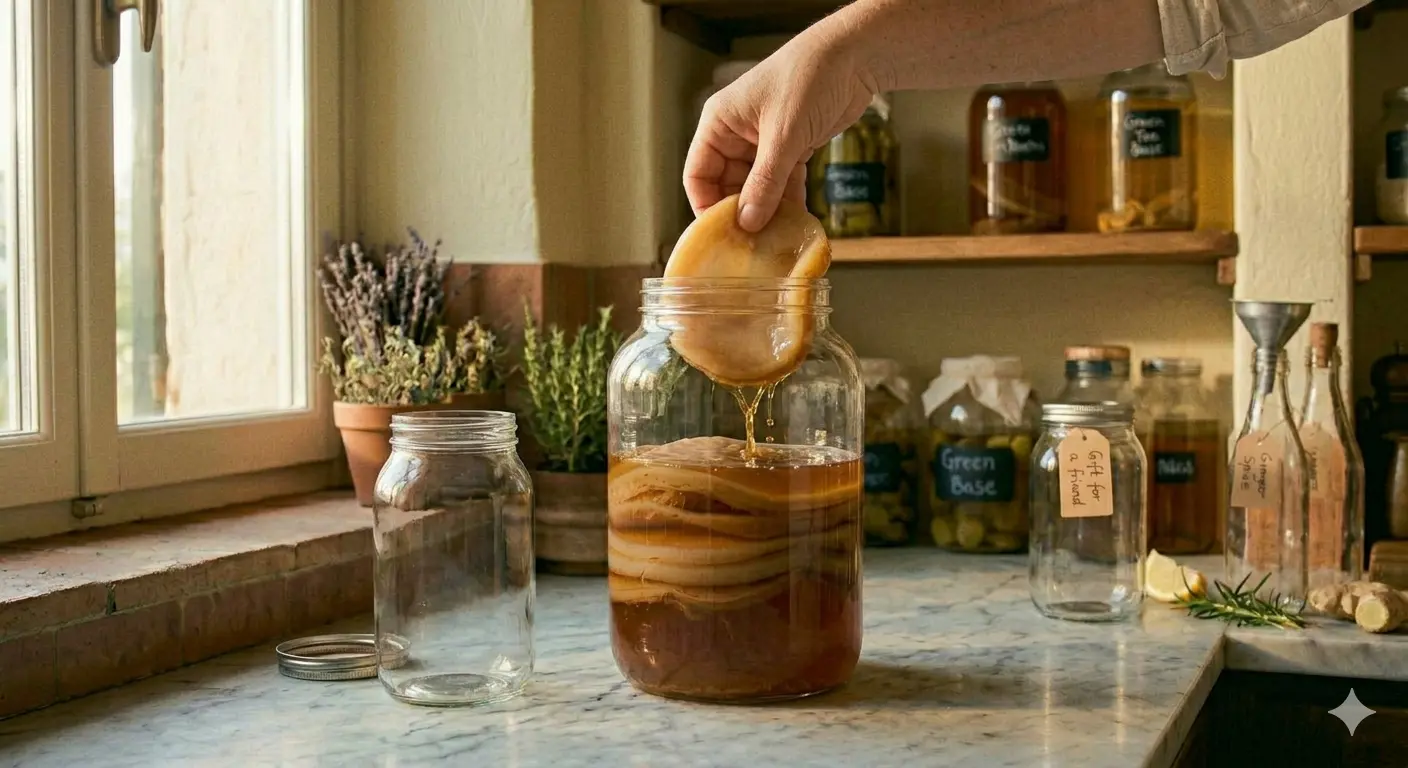
The whole point of maintaining a SCOBY hotel is having backup cultures ready. When you need one, simply reach in with clean hands and pull out a SCOBY. I always take from the middle or top layer—these are newer and more active.
Last month, I used a hotel SCOBY to start a batch after my regular brewing
SCOBY developed a small suspicious spot (turned out to be harmless yeast,
but I was cautious). The hotel SCOBY performed perfectly, producing a new
layer within seven days of fermentation—batch #147 in my brewing log. Once
ready, I bottled it with fresh fruits and herbs for flavoring.
You can also use hotel liquid as starter tea. In fact, because it’s more acidic than regular kombucha, it’s actually superior for starting new batches. The lower pH gives your fermentation a head start, creating an environment where your SCOBY can thrive and harmful bacteria cannot.
Troubleshooting Common SCOBY Hotel Issues
Hotels are generally low-maintenance, but issues do pop up. Here’s what I’ve encountered and solved:
Mold on the surface: This is rare if your liquid is acidic enough, but it happens. I had mold once when I added a SCOBY from a batch that hadn’t fully fermented (pH was too high at 4.5). If you see fuzzy growth—blue, green, black, or white fuzzy spots—you need to discard everything and start fresh. Don’t risk it. Mold in kombucha means the pH wasn’t low enough, and a scientific review of kombucha’s active compounds (PubMed) confirms that proper acidity is the primary defense against contamination.
Very dark, thick liquid: Totally normal. Your hotel liquid will become increasingly concentrated. If it seems too thick (almost syrupy), remove half and replace with fresher kombucha. This happened to my hotel after I neglected it for three months during a busy period—the liquid was incredibly sour but the SCOBYs were perfectly healthy.
SCOBYs turning brown: The oldest SCOBYs will darken over time as the yeast becomes more concentrated. Brown SCOBYs are fine to use—mine are often tan to medium brown. Only discard them if they’re black or smell off (kombucha should smell vinegary, not rotten).
Strange smells: Your hotel should smell like strong vinegar. If it smells like sulfur, cheese, or anything truly foul, something’s wrong. This usually indicates contamination or an imbalanced culture. I’ve only had this once, and starting fresh was the only solution.
Frequently Asked Questions About SCOBY Hotels
Q: How many SCOBYs can I store in one hotel?
A: I comfortably keep 6-8 SCOBYs in my half-gallon jar. You can stack them—they’ll naturally press together and sometimes fuse into thicker layers. There’s no exact limit, but overcrowding makes it harder to extract individual SCOBYs when you need them. If your jar starts looking like a solid mass of SCOBY with barely any liquid, it’s time to remove some of the older cultures. The key is maintaining enough liquid (at least 2-3 cups) to keep everything submerged and healthy.
Q: Can I feed my SCOBY hotel with sweet tea like a regular brew?
A: You can, but I don’t recommend it as standard practice. The cultures in your hotel are in a dormant/maintenance state, not active fermentation. Adding sweet tea will kickstart full fermentation, producing more kombucha and more SCOBY layers—which defeats the purpose of a hotel as storage. I only add sweet tea if I’ve neglected my hotel for months and the liquid level is critically low. Otherwise, top up with finished, unflavored kombucha from your regular brewing. This maintains the acidic environment without encouraging excessive growth.
Q: How long can SCOBYs survive in a hotel?
A: Indefinitely, with proper maintenance. I’ve used SCOBYs that were in my hotel for over a year—they started strong batches without issues. The acetic acid in the liquid preserves the cultures beautifully. However, I do a quality check before using older SCOBYs: they should feel firm (not slimy), smell vinegary (not off), and show no signs of mold. The oldest SCOBY I’ve successfully used was approximately 18 months old, pulled from the middle of my hotel, and it produced a perfectly normal batch that reached ideal tartness in eight days.
Q: What’s the difference between a SCOBY hotel and just storing extra kombucha?
A: A SCOBY hotel specifically stores the SCOBY cultures themselves, not just liquid. When you store extra kombucha in bottles, you have starter liquid but no SCOBY pellicle. The pellicle (the rubbery disc we call a SCOBY) isn’t strictly necessary for brewing—the bacteria and yeast in the liquid can ferment on their own—but having the pellicle speeds up fermentation and provides a protective layer. A proper hotel stores both the pellicles and highly acidic liquid, giving you everything needed to start a new batch quickly. I keep bottled kombucha as starter liquid backup, but my hotel is specifically for the pellicles.
Q: Can I start a SCOBY hotel with SCOBYs from flavored kombucha batches?
A: Not ideal, but possible if you rinse them first. I once accidentally added a SCOBY from a ginger-lemon batch to my hotel, and the ginger flavor persisted in my next three brews. Now I only use SCOBYs from unflavored batches for my hotel. If you must use a flavored SCOBY, rinse it gently under filtered water (not tap water with chlorine) and let it sit in plain kombucha for a week before adding to your hotel. The flavoring compounds will dilute over time, but starting with unflavored SCOBYs is much cleaner and prevents cross-contamination of flavors.
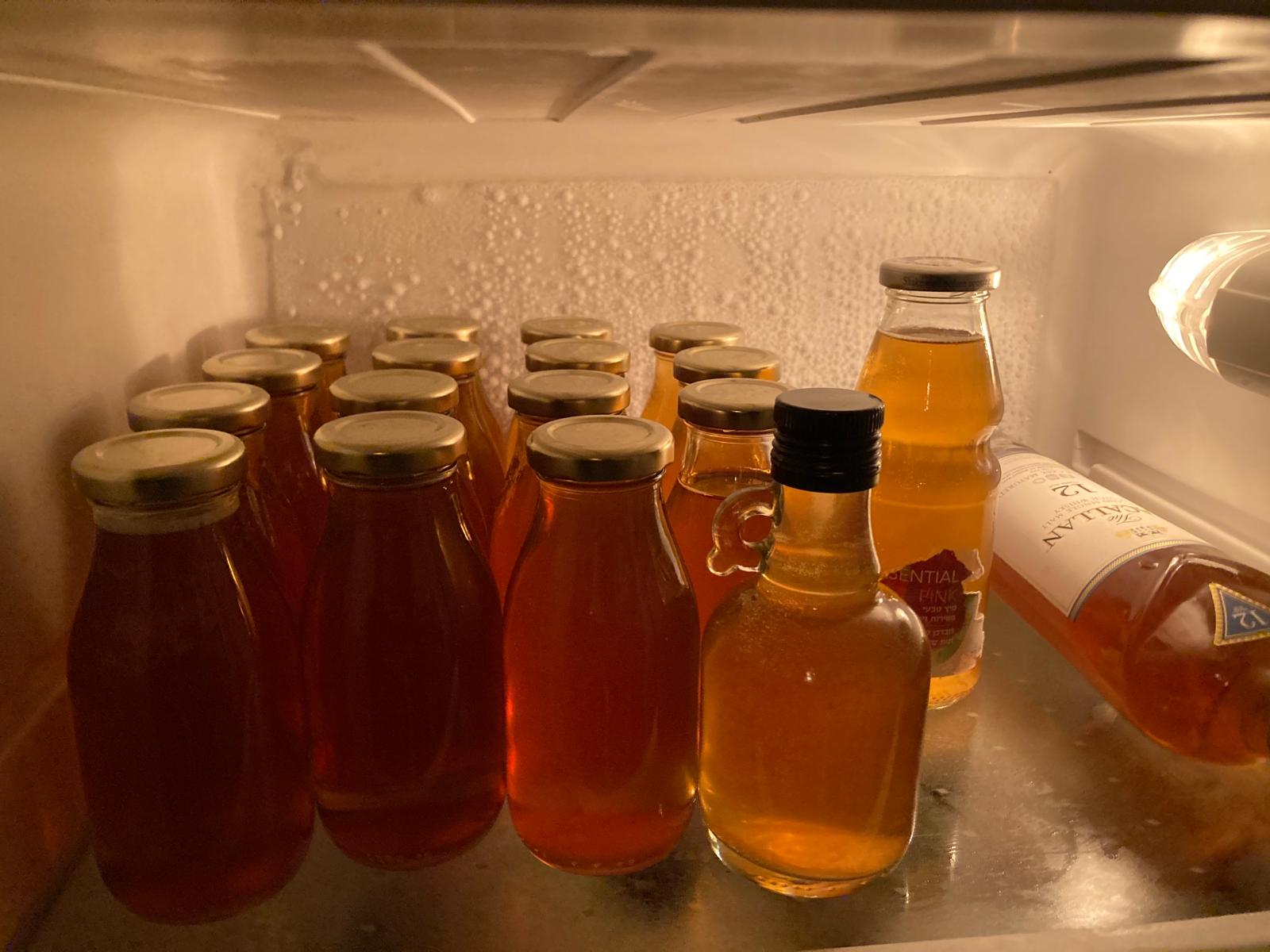
Home kombucha brewer based in Tel Aviv with 6+ years of experience and 500+ batches brewed. I started Kommbucha.com because the information online was scattered or just plain wrong — I wanted advice from someone who actually brews. My kombucha is sold at local Tel Aviv coffee shops and been gifted many times in Detroit, Michigan .