
✍️ Written & Updated by Ofir The Fermenter · 📅 May 15, 2026
You’ve brewed a beautiful batch of kombucha, bottled it carefully, waited patiently—and when you finally crack open that bottle, there’s barely a whisper of fizz. I’ve been there more times than I’d like to admit, especially back in my first year of brewing. Batch #14 was particularly disappointing: barely any carbonation despite following my usual process. Turns out, I’d made three rookie mistakes at once.
Let’s walk through exactly why your kombucha lacks carbonation and how to get those satisfying bubbles back. These solutions come from years of troubleshooting my own flat batches and helping other brewers diagnose their carbonation problems.
Kombucha Not Fizzy? Here’s What Carbonation Actually Needs
Carbonation happens when yeast consumes sugar and produces carbon dioxide as a byproduct. For your kombucha to get fizzy, you need three things working together: active yeast, available sugar, and a sealed environment to trap the CO2. When any of these elements is missing or insufficient, you end up with flat kombucha.
The process is simple chemistry. Saccharomyces and other yeasts in your SCOBY break down simple sugars through fermentation, releasing CO2 and small amounts of alcohol. In an open vessel during first fermentation, this CO2 escapes into the air. During second fermentation in sealed bottles, the gas dissolves into the liquid, creating those prized bubbles. According to peer-reviewed research on kombucha fermentation (NIH), the yeast-to-bacteria ratio significantly impacts carbonation levels.
Reason #1: Not Enough Sugar for Second Fermentation
The most common reason for kombucha not fizzy is insufficient sugar during the second fermentation phase. After first fermentation, your kombucha has already consumed most of the sugar from your sweet tea base. If you bottle it without adding additional fuel for the yeast, there’s simply nothing left to create carbonation.
I learned this the hard way with batch #14. I’d bottled plain kombucha without any fruit or added sugar, expecting the residual sweetness to be enough. After five days, I had perfectly sour kombucha with zero fizz. The yeast had nothing to work with.
The fix is straightforward: add 1-2 teaspoons of sugar (or equivalent in fruit juice) per 16-ounce bottle before sealing. I prefer using a teaspoon of organic cane sugar dissolved in a tablespoon of warm water—it distributes evenly and gives consistent results. Fruit additions work too, but they’re less predictable since natural sugar content varies.
Reason #2: Your Second Fermentation Is Too Short
Even with adequate sugar, kombucha not fizzy often means you’re simply not giving the yeast enough time to do its work. Second fermentation typically needs 2-7 days at room temperature, depending on your ambient conditions and how much carbonation you want.
Most beginners bottle their kombucha and check it after just one or two days. At that point, the yeast is still ramping up activity. The real carbonation magic happens between days 3-5 for most batches. In cooler environments (below 70°F), you might need the full week.
I now follow a simple schedule: bottle with added sugar, leave sealed at room temperature for 3-4 days, then do a test pour from one bottle. If it’s not fizzy enough, I let the remaining bottles go another 1-2 days. Once you’ve dialed in your specific environment, you’ll know your sweet spot. Just remember that the fermentation process continues as long as bottles stay warm and sealed.
Reason #3: Weak or Imbalanced Yeast Population
Sometimes the issue isn’t your technique—it’s your SCOBY itself. A healthy kombucha culture needs a balanced symbiotic relationship between bacteria and yeast. If your SCOBY is yeast-deficient, you’ll consistently get kombucha not fizzy regardless of how much sugar you add or how long you ferment.
This often happens when SCOBYs are over-rinsed (which washes away yeast), when brewing temperatures are too cool (yeast prefers warmth), or after multiple generations without proper maintenance. The brown stringy bits you see in your brew? That’s yeast, and you actually want some of that.
To revitalize a weak SCOBY, try these steps: First, make sure you’re including 1-2 cups of mature starter tea with each new batch—this carries active yeast along with the culture. Second, maintain brewing temperatures between 75-85°F, which favors yeast activity. Third, avoid rinsing your SCOBY; just remove it gently from finished batches and place it directly into fresh sweet tea. Within 2-3 brewing cycles, your yeast population should strengthen, and carbonation will improve naturally.
Reason #4: Bottles Aren’t Properly Sealed
Here’s a frustrating one: you’ve done everything right with your fermentation, but your kombucha not fizzy because CO2 is literally escaping through poor bottle seals. I discovered this issue when I switched to some beautiful recycled bottles with worn-out swing-top gaskets—they looked perfect but leaked gas like crazy.
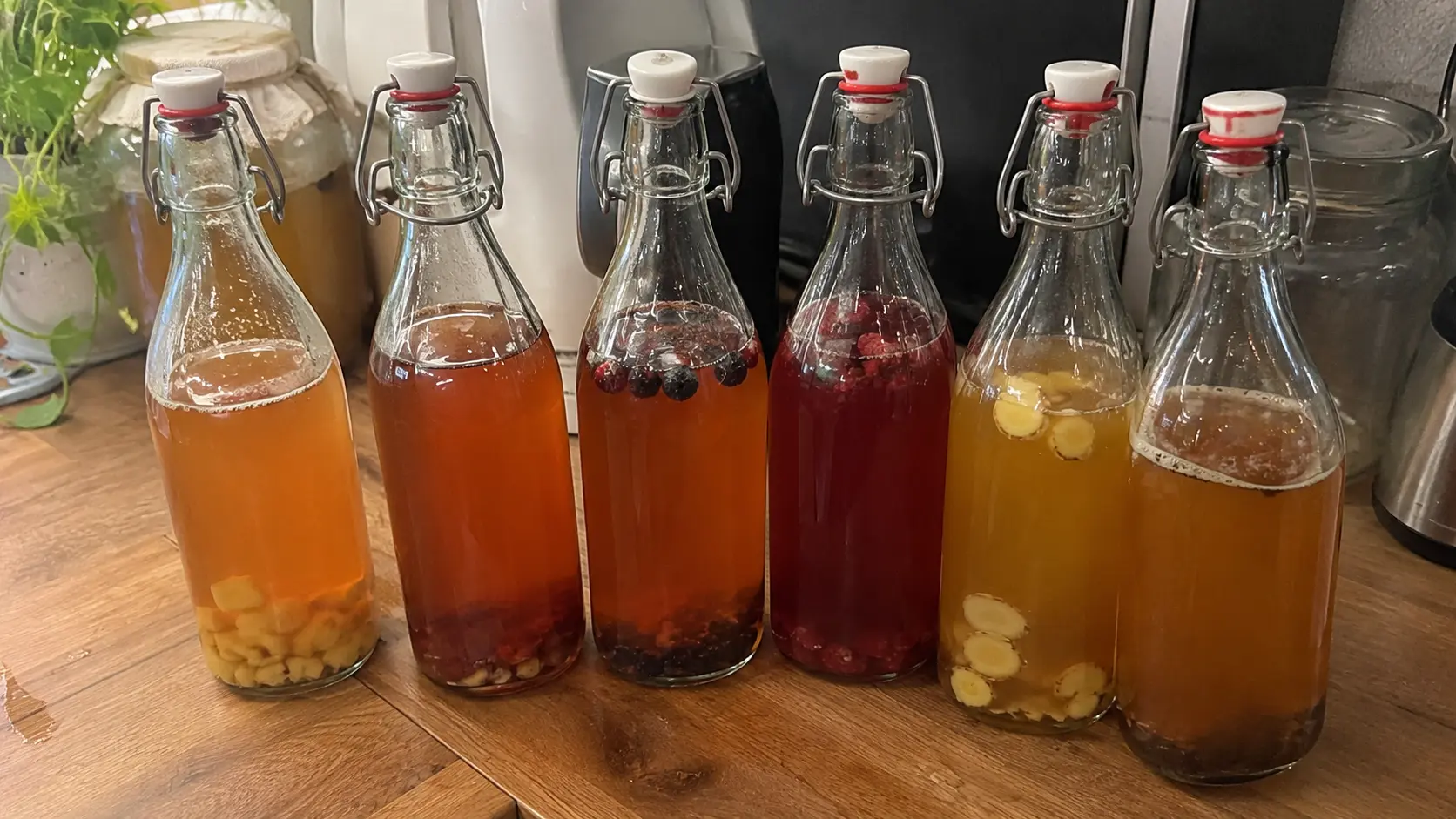
Flip-top bottles with rubber gaskets are the gold standard for kombucha carbonation because they create an airtight seal that traps CO2. Regular screw-cap bottles work if the caps are new and undamaged, but old caps or those that have been opened multiple times lose their sealing ability. Even a tiny gap is enough to let precious carbonation escape.
Test your bottles before brewing: fill one with water, seal it, turn it upside down, and squeeze gently. Any leakage means that bottle won’t carbonate properly. Replace worn gaskets annually if you’re a regular brewer—they’re inexpensive and make a massive difference. Since switching to fresh gaskets every spring, I haven’t had a single flat batch from seal issues.
Reason #5: First Fermentation Went Too Long
Counterintuitively, over-fermenting during the first stage can lead to kombucha not fizzy later. When first fermentation extends beyond 7-10 days, the bacteria begin producing more acetic acid and consuming more of the available sugars. This creates a very sour kombucha with minimal residual sugar for yeast to work with during second fermentation.
Additionally, as pH drops below 2.5 (which happens with extended first fermentation), the increasingly acidic environment actually inhibits yeast activity. The bacteria thrive in acidic conditions, but yeast prefers a slightly less harsh environment. According to a scientific review of kombucha’s active compounds (PubMed), the fermentation environment significantly affects which microorganisms dominate.
My rule of thumb: taste your kombucha after 5-7 days of first fermentation. You want it pleasantly tart but still slightly sweet—that residual sweetness indicates available sugar for carbonation. If it’s mouth-puckeringly sour, you’ve likely gone too far for optimal fizz potential.
Reason #6: Temperature Is Too Cold
Yeast is temperature-sensitive, and cold environments dramatically slow its activity. If you’re storing bottles for second fermentation in a cool basement, garage, or refrigerator, you’ll almost certainly end up with kombucha not fizzy—or at least not as fizzy as you’d like.
The optimal temperature range for vigorous yeast fermentation is 75-85°F. Below 70°F, carbonation slows significantly and may require twice as long. Below 60°F, yeast activity nearly stops. I learned this during winter when I moved my bottling operation to our mudroom, which stays around 65°F. Batches that normally carbonated in 3 days were taking 8-10 days and still coming out under-carbonated.
The solution: find the warmest spot in your home for second fermentation. The top of the refrigerator, a kitchen cabinet near the stove, or even inside a turned-off oven with the light on can provide the warmth yeast needs. Just avoid direct sunlight, which degrades flavor compounds. A simple stick-on thermometer strip helps you monitor conditions and dial in your ideal fermentation spot.
Reason #7: You’re Using the Wrong Type of Sugar
Not all sugars are created equal when it comes to carbonation. While kombucha culture can ferment various sweeteners during first fermentation, the yeast responsible for carbonation has specific preferences. If your kombucha not fizzy despite seemingly doing everything right, your sugar choice might be the culprit.
Plain white sugar, organic cane sugar, and glucose are most easily fermented by yeast, producing reliable carbonation. Honey works but ferments slowly and unpredictably. Coconut sugar, maple syrup, and agave contain complex sugars that yeast struggles to process quickly. Artificial sweeteners don’t work at all—yeast simply can’t metabolize them.
For second fermentation specifically, I stick with plain organic cane sugar or white sugar. They’re inexpensive, dissolve easily, and give me consistent results every time. If you’re experimenting with alternative sweeteners, that’s fine for first fermentation (your SCOBY will adapt), but for reliable fizz, use simple sugars during bottling. Healthline’s guide to kombucha SCOBY discusses how different sugars affect fermentation outcomes.
Quick Fixes to Try Right Now
If you have flat kombucha sitting on your counter, here’s what to do immediately: First, if bottles are still at room temperature and it hasn’t been more than a week, just wait longer. Give them another 2-3 days. Second, if they’ve been cold or it’s been over a week, open each bottle, add half a teaspoon of sugar, reseal, and ferment for another 3-4 days at room temperature.
Third, ensure your storage area is warm enough—move bottles to a warmer spot if needed. Fourth, gently tip bottles upside down once daily to redistribute yeast sediment, which helps activate carbonation. These simple interventions have saved countless batches for me.
For future batches, implement the fundamentals: add 1-2 teaspoons sugar per bottle, use airtight containers with good seals, ferment at 75-80°F for 3-5 days, and make sure your SCOBY has visible yeast strands. Following this checklist has given me consistently fizzy results across dozens of batches.
When Flat Kombucha Is Actually Fine
Here’s something worth mentioning: not every kombucha needs to be highly carbonated. Some traditional kombucha styles are intentionally less fizzy, and some drinkers actually prefer a gentler bubble. If your kombucha tastes good—balanced, slightly tart, with pleasant depth—the carbonation level is ultimately a matter of preference.
That said, if you’re specifically chasing that champagne-like effervescence, you now have the knowledge to get there. The difference between flat and fizzy kombucha usually comes down to one or two small adjustments in your process. Once you’ve identified which factor applies to your situation, the fix is straightforward and repeatable.
Q: How long should I do second fermentation for fizzy kombucha?
A: Most kombucha needs 3-5 days of second fermentation at room temperature (75-80°F) to develop good carbonation. Cooler environments may require 5-7 days. Start checking after 3 days by carefully opening one test bottle—if it’s not fizzy enough, let the remaining bottles go another 1-2 days. Individual factors like yeast strength, sugar amount, and temperature affect timing, so you’ll dial in your sweet spot after a few batches.
Q: Can I fix kombucha that’s already flat?
A: Yes, if your kombucha not fizzy and bottles are still at room temperature, you can rescue them. Open each bottle, add 1/2 teaspoon of sugar, reseal tightly, and ferment for another 3-4 days in a warm spot. This gives yeast fresh fuel to create carbonation. If bottles have already been refrigerated, you’ll need to bring them back to room temperature first, then add sugar and re-ferment.
Q: Does fruit juice help carbonate kombucha?
A: Absolutely. Fruit juice adds natural sugars that yeast can ferment during second fermentation, creating carbonation while also flavoring your brew. Use about 2-3 tablespoons of 100% fruit juice per 16oz bottle. Juices high in sugar like grape, apple, and pineapple carbonate most aggressively. Fresh fruit pieces work too but are less predictable since sugar content varies, and they can create excess carbonation that may cause over-pressurized bottles.
Q: Why does store-bought kombucha have more fizz than mine?
A: Commercial kombucha is often force-carbonated or fermented under precisely controlled conditions that home brewers can’t easily replicate. Some brands also add CO2 directly before bottling. Additionally, commercial operations can push carbonation levels higher because they use specially rated bottles that handle more pressure. While you can achieve excellent carbonation at home, matching that intense champagne-level fizz requires aggressive fermentation that risks bottle explosions with standard containers.
Q: Is flat kombucha still healthy?
A: Yes, flat kombucha retains all the same probiotics, organic acids, and beneficial compounds as fizzy kombucha. Carbonation is purely about mouthfeel and enjoyment—it doesn’t indicate whether fermentation was successful or whether the beverage is healthy. The beneficial bacteria like Lactobacillus and Acetobacter that support gut health are present regardless of carbonation level. So if your kombucha not fizzy but tastes good and has that characteristic tang, it’s still perfectly nutritious.
Home kombucha brewer based in Tel Aviv with 6+ years of experience and 500+ batches brewed. I started Kommbucha.com because the information online was scattered or just plain wrong — I wanted advice from someone who actually brews. My kombucha is sold at local Tel Aviv coffee shops and been gifted many times in Detroit, Michigan .